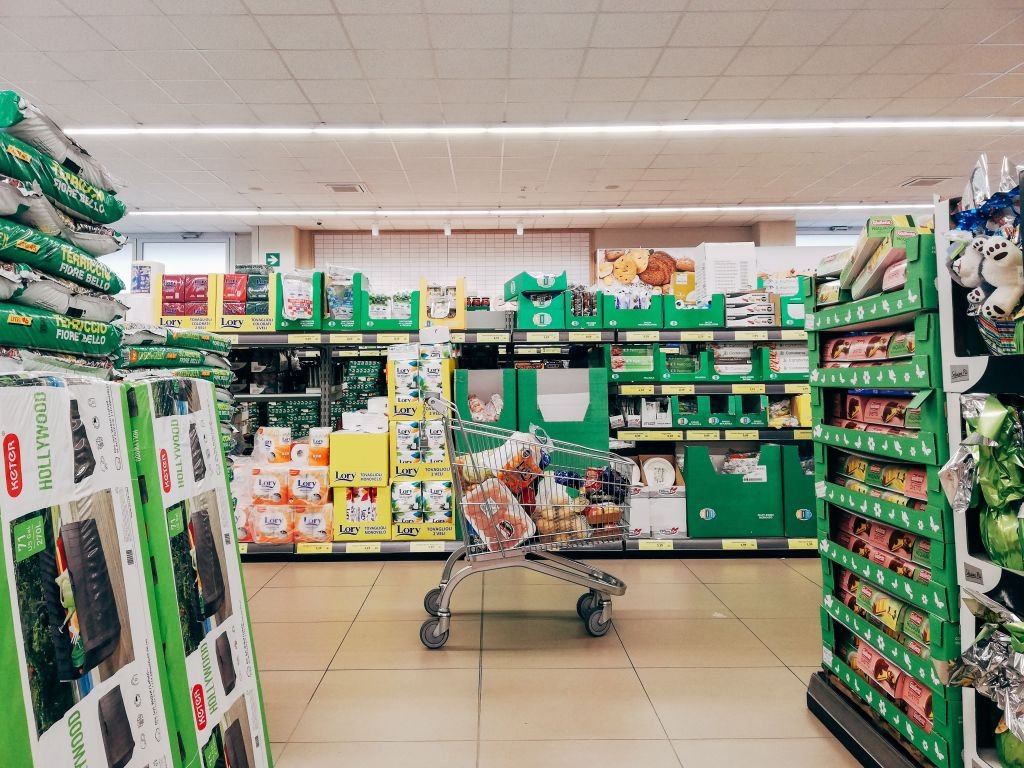
The number on the shelf used to be the number you paid. That’s changing fast, and it’s exactly why so many people are asking whether grocery store prices can change while you’re still shopping. Walmart, Kroger, Schnucks, Whole Foods, and Amazon Fresh are all rolling out electronic shelf labels, small digital screens that replace paper price tags and can update instantly, sometimes multiple times a day.
Here’s the part that actually matters for a grocery budget. A digital tag isn’t just a paper tag with a screen instead of ink. It’s connected to a system that can raise or lower a price based on time of day, day of the week, or demand, the same basic idea behind how airline tickets and rideshare prices move.

Research firm Decodo tracked 1.5 million grocery items across 120 platforms and found real movement, not a rumor. Roughly half of prices went up and half went down over the study period, meat prices climbed 11.3% over six months while dairy and pantry staples actually dropped. The same research found prices tend to run highest on Saturdays and lowest on Wednesdays and Mondays at Walmart and Kroger specifically, according to reporting from First Alert 4.
That day-of-week pattern is worth sitting with for a second. If a store can quietly charge more on a Saturday, when most working families actually do their shopping, the person with the least flexible schedule pays the highest price without ever knowing a lower one existed two days earlier.
Related read:
82% of Americans Changed How They Shop for Groceries Last Year. Here’s What I Started Doing With Mine.
This isn’t just a shopper’s hunch either. Senators Elizabeth Warren and Bob Casey sent Kroger a direct letter over exactly this concern, warning that electronic shelf labels could let stores raise the price of a turkey right before Thanksgiving, or ice cream on a hot day, timed to whenever demand is highest. The letter cited a 2021 UCLA analysis concluding that time-based pricing creates value for the store through higher prices while offering the shopper nothing back.

The financial backdrop makes the concern harder to wave off. Grocery spending already ate up 11.2% of the average household budget in 2023, a 30-year high, while Kroger alone reported 3.1 billion dollars in operating profit that year with gross margins above 20% for five straight years. When a company adds a tool that can move prices by the hour, and profit margins are already that strong, the burden of proof shifts to explaining why prices would only ever move down.
Retailers are pushing back on the dynamic pricing label specifically. Walmart has stated its digital tags cannot be used for what it calls surveillance pricing, and Schnucks says it doesn’t use dynamic pricing at all, attributing price changes to supplier and logistics costs instead of demand. Those denials are worth taking seriously, but they don’t change the underlying fact that the technology to move prices by the hour now exists in more stores than it did a year ago.
| Data point | Detail |
|---|---|
| Items tracked (Decodo study) | 1.5 million, across 120 platforms |
| Meat price change (6 months) | +11.3% |
| Dairy and pantry staples | Declined over same period |
| Highest price day | Saturday |
| Lowest price days | Monday and Wednesday |
| Kroger FY23 operating profit | $3.1 billion |
None of this means every grocery store with a digital tag is quietly gouging shoppers. Some of these systems genuinely exist to cut down on the labor cost of printing and swapping thousands of paper tags by hand, and price drops happen just as often as increases in the actual data. The real issue isn’t that grocery store prices can change while you’re still shopping, it’s that most shoppers still assume the shelf price is fixed for the day, when it increasingly isn’t.
Also useful:
I Was Shocked When I Saw My Grocery Bill Last Week
There’s a privacy layer to this too that’s easy to miss. The Warren-Casey letter also flagged that Kroger has explored facial recognition cameras tied to personalized pricing, the idea being that a store could eventually learn how much a specific shopper is willing to pay and price accordingly. That’s a different, more targeted version of the same underlying shift: the price is no longer a fixed fact printed on a tag, it’s a number a system decides for that moment.

The practical fix doesn’t require new technology on the shopper’s side. Since the data shows prices trending lower earlier in the week, shifting a grocery run to Monday or Wednesday instead of the weekend is a real, free way to land on the cheaper side of the same item. It’s a small habit, not a guarantee, but it’s grounded in the actual pattern the research found rather than a guess.
Worth trying:
10 Easy Ways to Save Money Every Month
Checking a receipt against the shelf price is also worth doing more than most people bother to. Many states have laws requiring a refund or a free item if a scanner rings up higher than the posted shelf price at the time of purchase, though the exact rule varies by state and isn’t guaranteed everywhere. A photo of the shelf tag before checkout, taken with a phone already in hand, costs nothing and settles the question fast if the total looks off.
Many Americans grew up assuming a grocery store’s prices were the same for everyone walking through the door that day. That assumption is quietly getting more complicated as digital shelf tags spread to more chains, and the shift is happening well before most shoppers have any reason to notice it.
None of this means grocery shopping needs to become a research project every week. It means the sticker on the shelf is worth a second look now, since grocery store prices can genuinely change while you’re still shopping, not because it’s wrong, but because it might already be different from what it was an hour ago.
Have you noticed a grocery price change between visits to the same store recently, or is this the first time you’re hearing digital tags could be why?
Disclaimer: MoneyWisePro is not a financial advisor, lawyer, or retail industry professional. This article is for general information only and is not financial advice. Always check with your local consumer protection office regarding pricing laws in your state.