Tag: earned-wage-access

  • Your Cash Advance App Interest Rate Is Higher Than the Tip Makes It Look

    Your Cash Advance App Interest Rate Is Higher Than the Tip Makes It Look

    Payday is three days away. The rent is due today. So you open an app, tap a button, and $80 lands in your account in minutes. The app calls the extra charge a tip. Nobody calls it what a cash advance app real interest rate actually works out to once you do the math.

    Apps like Dave, Earnin, MoneyLion, and Brigit are now used by millions of Americans living paycheck to paycheck. They market themselves as a friendly alternative to overdraft fees and payday loans, not a loan product at all. Technically, the government agrees with them. That agreement is exactly why this matters right now.
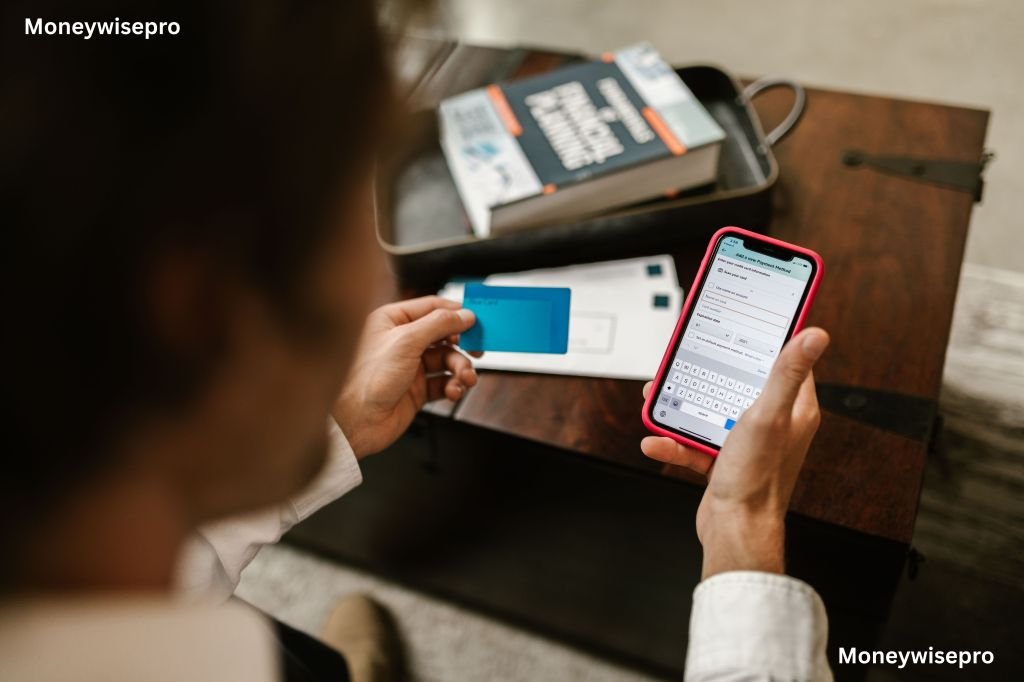
    close up of hand holding phone with a banking app open near unpaid bills

    In December 2025, the Consumer Financial Protection Bureau issued a formal advisory opinion stating that certain earned wage access products are not credit under the Truth in Lending Act. In plain English, that means these apps do not have to show you an APR the way a credit card or a payday lender legally must. No box on the screen. No number that makes you pause before you tap confirm.

    This is not the first time the CFPB has flipped on this exact question. An earlier proposed rule would have treated earned wage access as a loan and forced real disclosure. The industry lobbied hard against it, and the advisory opinion effectively reversed course. Consumer advocates pushed back just as hard on the reversal. The National Consumer Law Center argues that earned wage payday loans are loans no matter what the label on the app says, and that the fee structure functions exactly like the short-term lending it was designed to replace. Two federal decisions on the same product, two years apart, landed in opposite places. That alone should tell you the cash advance app real interest rate was never a settled question, just a convenient one for the apps to avoid answering.

    Here’s the math nobody shows you on the confirmation screen. Say you borrow $100 five days before payday and the app suggests a $5 tip plus a $3.99 instant-transfer fee. That’s $8.99 to borrow $100 for five days. Run that same fee structure for a full year, the way an APR calculation actually works, and it lands around 650 percent. A typical credit card sits under 30 percent. Even a payday loan, the thing these apps say they’re replacing, usually lands lower.

    Cash Advance ProductTypical CostEstimated Annualized Rate
    Cash advance app (optional tip plus rush fee)$5 to $15 per $100, 5-10 day termRoughly 200% to 650%+
    Traditional payday loan$15 per $100 borrowed, 14-day termRoughly 391%
    Overdraft fee$33 average, one-time charge on the shortfallVaries by shortfall size, often 1000%+ on small overdrafts
    Credit card cash advance~5% fee plus ongoing APRRoughly 25% to 30% APR
    person sitting at a table reviewing bills with a calculator and laptop

    To be fair to these apps, they exist for a real reason. Many Americans reach for one specifically to dodge a $33 average overdraft fee or skip a payday lender charging 391 percent on paper, and for a single, occasional five-day gap, the app can genuinely be the cheaper option on the table. The real risk shows up when one advance turns into a standing habit, because the same paycheck now has a hole in it every single pay period, and the gap just gets a little wider each time.

    You don’t have to guess whether one of these apps is quietly draining your paycheck every two weeks.

    Worth knowing:
    Buy Now, Pay Later Looked Smart. Here’s Why It’s Becoming a Debt Problem for Millions.

    Payactiv, one of the larger earned wage access providers, frames the CFPB’s decision as a genuine win for workers, arguing that treating early wage access like a loan would have buried a helpful benefit under paperwork most employers wouldn’t bother offering. That’s a fair point for someone using the feature once in a while through their employer, free of charge. It’s a very different product once you’re the one paying a fee out of your own pocket, every two weeks, through an app instead of your employer.

    A few of these apps do let you skip the tip entirely and wait a day or two longer for the same money, and picking that free option every time you can is the single easiest way to keep the real cost near zero instead of near a payday loan. The tip button is usually set to a default amount before you even look at the screen, and lowering it or turning it off almost never changes how fast the advance arrives if you are not in a rush. Most people never touch that setting, which is exactly why the average fee keeps climbing across the industry year after year.

    The same short-term cash gap shows up in a dozen other forms once you start looking for it.

    If you are already juggling more than one of these short-term borrowing tools, it helps to see every due date in one place instead of guessing. Grab the free tracker here and get ahead of the next payment before it sneaks up on you.

    Same principle applies:
    Personal Loans: The New Debt Trap Americans Are Walking Into

    One question almost nobody asks before downloading a random app: does your own employer already offer earned wage access for free through a payroll benefit. A growing number of companies now partner directly with providers like Payactiv or DailyPay and cover the cost themselves, since it costs the employer little and keeps workers from quitting over a cash crunch. Checking your HR benefits page for that option first, before ever paying a tip to a consumer app, is the one step that can make this entire math problem disappear.
    calendar page with a due date circled next to a stack of bills

    So before your next advance, do this instead of trusting the word tip. Add up every fee from the app over the last two pay periods. Divide by how many days the money was actually borrowed. Multiply by 365, then divide by the amount borrowed. That’s the real cash advance app interest rate for your own account, not the one on the confirmation screen.

    None of this means the app is evil or that you made a bad call using it once. It means the word tip is doing a lot of work to keep that number off your screen, and now you know how to find it yourself.

    That gap between a paycheck landing and a bill being due is where half of this entire industry lives, and closing even a small part of that gap yourself changes the math completely.

    Check this:
    Your Emergency Fund Isn’t What It Used to Be. Here’s What Changed.

    So next time the app asks for a tip before payday, are you going to check the real number first, or just tap confirm like always?

    Disclaimer: MoneyWisePro is not a financial advisor. This article is for general information only and is not financial advice. Contact a licensed financial advisor before relying on any cash advance product for regular income shortfalls.


  • The Real Reason Your First Paycheck Looks Smaller Than You Expected

    The Real Reason Your First Paycheck Looks Smaller Than You Expected

    You accept a job offer, you do the math on your new salary, and then your first paycheck looks smaller than you expected by a few hundred dollars or more. This catches almost every new employee off guard at least once, and it is not a mistake by your employer most of the time. It comes down to a mix of tax withholding, timing rules, and deductions that nobody explains clearly before your first day.

    Start with taxes, because they take the biggest bite. Federal income tax, state tax, and Social Security and Medicare (FICA) all get pulled out automatically, and the combined hit is bigger than most people picture in their head. CNBC walked through a real example: someone earning $65,000 in New York City can lose close to 32% of that salary to combined federal, state, and city taxes, which works out to roughly $1,750 take-home on a biweekly paycheck instead of the $2,500 gross number the salary math suggests. That gap is not a fee or a glitch. It is the system working as designed, just rarely explained out loud.

     A young professional looking surprised while checking a paycheck on a laptop at a desk

    Timing makes the first paycheck problem worse. Most companies do not pay you the moment you start working, they pay you after the pay period closes, a setup called paid in arrears. ADP lays out a typical example: start a job on a Monday, the two-week pay period ends the following Friday, and the actual paycheck does not arrive until the Friday after that. That is roughly two to three weeks of work before any money shows up, and if a new hire budgeted around their old job’s payday, that stretch can quietly wreck a month.

    Worth knowing:
    My Bank Account Fees Are Eating My Paycheck

    Beyond taxes and timing, pre-tax deductions shrink the number further before it ever hits your account. Health insurance premiums, dental and vision plans, and 401(k) contributions all come out before you see a dollar, and none of these show up on the salary figure printed on your offer letter. Someone who signs up for a solid benefits package on day one can watch their first paycheck look smaller than you expected by several hundred dollars compared to someone who waited a pay cycle to enroll, even at the exact same salary. It is one more reason a first paycheck looks smaller than you expected, well before the offer letter ever hinted at it.

    Most workers genuinely do not understand where this money goes, and that is not a knowledge gap unique to any one generation, though it is worse for younger workers. A survey of 1,000 US employees by Method Research, run for Deel in February 2025, found that 29% of workers admit they are confused about their paycheck deductions, and only 27% of Gen Z employees feel confident explaining federal income tax withholding, compared with 63% of Baby Boomers. That confidence gap matters because Gen Z workers are also the ones most likely to be starting a first or second job right now, which is exactly when a first paycheck looks smaller than you expected and there is nobody around yet to explain why.

     A man reviewing tax withholding paperwork with a calculator on a table at home
    CategoryBiweekly AmountShare of Gross Pay
    Gross pay ($65,000 salary)$2,500100%
    Federal income tax~$550~22%
    State and local tax (NYC example)~$245~9.8%
    Social Security and Medicare (FICA)~$191~7.65%
    Approximate take-home pay~$1,750~70%

    This helps:
    Your Paycheck Isn’t Keeping Up With Inflation. And That’s Not Your Fault.

    Employers know this gap causes real stress, which is part of why earned wage access apps have grown fast in 2026. These tools let workers pull a portion of wages they have already earned before the official payday, for a small fee. According to the Wage to Wallet Index, a 2026 study by PYMNTS Intelligence, WorkWhile, and Ingo Payments, roughly 4 in 5 workers surveyed said their employer now offers some form of on-demand pay, yet only about 10% use it frequently. The honest read on that data is that most workers keep it as a backup, not a habit, and that is the smarter way to treat it. A few dollars per early withdrawal adds up fast if it becomes a monthly routine instead of a genuine emergency tool.

    None of this means the deductions themselves are unfair. Federal and state taxes fund real public services, and FICA specifically funds Social Security and Medicare, programs most workers will eventually rely on. The frustration is not that the money disappears, it is that almost nobody explains where it goes before the first paycheck lands, so the surprise feels like a loss instead of what it actually is, which is the system working the way it was built to.

    That gap between the number on an offer letter and the number that actually lands in the account catches nearly everyone off guard at least once. It tends to show up at the worst possible time, right when rent, a phone bill, or a car payment is already due.

    Same principle applies:
    Your Emergency Fund Isn’t What It Used to Be. Here’s What Changed.

    A woman checking her banking app on a smartphone while relaxing at home on a couch

    A few real steps make this easier before it happens rather than after. Ask HR for the exact pay schedule and the exact date of the first payday before your first day, not after. Use the IRS withholding estimator to check that your W-4 matches your real situation, since a wrong W-4 is one of the few parts of this you can actually control. And if the arrears gap really does create a cash crunch, treat earned wage access as a one-time bridge, not a recurring paycheck substitute, given how quickly small per-use fees turn into a real cost over a year.

    So if your first paycheck looks smaller than you expected, the honest answer is that it probably is not a mistake, and it is not a trick either, it is a system almost nobody explains clearly before the money shows up.

    Did your first paycheck at a new job ever come in lower than you planned for, and if so, did anyone explain why before it happened?

    Disclaimer: MoneyWisePro is not a financial advisor, accountant, or tax professional. This article is for general information only and is not financial or tax advice. Check your own pay stub and W-4 with your employer or a licensed tax professional for guidance specific to your situation.