Welcome to WordPress. This is your first post. Edit or delete it, then start writing!
Category: Uncategorized
-
Is Your Credit Report Really Free in 2026? Here’s What the New $16 Fee Actually Means
Is your credit report really free in 2026? For most people, yes, but not always, and the fine print just got a fresh update. Starting January 1, 2026, the Consumer Financial Protection Bureau raised the maximum fee a credit bureau is allowed to charge for a credit report to $16, up 50 cents from the old $15.50 cap. That number sounds small, until you’re the one staring at a checkout screen wondering why a report you assumed was free suddenly has a price tag on it.
This isn’t a brand new tax on your credit history. It’s an annual inflation adjustment the Fair Credit Reporting Act has required every year since the 1990s, and it only kicks in for people who fall outside the free-report rules. The real problem is that most Americans have no idea what those free-report rules actually cover, so a fee that should almost never apply to them ends up catching people off guard anyway.
That confusion costs people real money. Some pay $16 out of pure uncertainty, not because they were required to. Others skip checking their credit report altogether because they assume it always costs something, and that avoidance is exactly how errors, old collections, and identity theft slip through unnoticed for months.
So is your credit report really free in 2026, or not? The honest answer is that it depends entirely on how and when you ask for it, and almost nobody walks through those rules before they hit the request button. A little context turns a confusing checkout screen into a five minute task with zero surprises.

Here’s what’s actually free, and it covers almost everyone. Since September 2023, all three major bureaus, Equifax, Experian, and TransUnion, permanently offer one free credit report every week through AnnualCreditReport.com, the site created specifically for this purpose under federal law. That weekly access never expires, and it applies whether you’re checking for the first time this year or the fifth.
On top of that, the Fair Credit Reporting Act guarantees a free report in several other situations. If you were denied credit, insurance, employment, or housing in the last 60 days based on something in your file, the report is free. If you’re unemployed and job hunting within the next 60 days, it’s free. If you’re on public assistance, or you believe your file is inaccurate because of fraud, it’s free too, according to the Federal Trade Commission.
The $16 fee cap only applies once you’ve used up your free options and request an additional report outside of those exceptions, say, a second pull in the same week out of pure curiosity, or a report from a smaller specialty bureau that tracks things like rental history or medical debt. The CFPB confirmed the new 2026 cap in a final rule that adjusts the maximum charge for inflation every year, as required by law.
Here’s the practical part. Go straight to AnnualCreditReport.com, not a copycat site, and request your report there first, every time, before anywhere else. If a site asks for a credit card number just to view a report, that’s the fee-based route, not the guaranteed free one, and it’s usually not necessary. Keeping that one habit is really the whole answer to whether your credit report is free in 2026, since the free path almost always covers what people actually need.
Worth separating clearly: this fee is about your credit report, the full file of your account history, not your credit score. Scores are a different product, and plenty of banks and card issuers hand those out free with no catch, so a $16 charge for a report doesn’t mean your score is locked behind a paywall too.
Speaking of scores, this one clears up a common myth about what actually moves the number:
Your Income Doesn’t Affect Your Credit Score. Here’s What Actually Does.
Some people figure paying $16 once in a while isn’t worth arguing over, and for a household with room in the budget, that’s a fair call. But for someone stretching every paycheck, that’s a real cost for something the law almost always guarantees for free, and paying it usually means the free option was overlooked, not that it didn’t exist. Is your credit report really free in 2026 even in that situation? Almost always yes, as long as you know which door to walk through first.
There’s also a version of this that costs more than money. Skipping your credit report because you assume it costs something means you might not catch a collection account that isn’t yours, a credit card opened in your name, or an old medical bill still dragging your score down long after it should have dropped off.
That last one matters more than most people realize:
Medical Debt Can Still Wreck Your Credit Score. Here’s the Real Rule in 2026.
Situation Do You Pay? Cost Weekly report from AnnualCreditReport.com No $0 Report after a credit, job, or housing denial (last 60 days) No $0 Report while unemployed and job hunting No $0 Extra report outside the free cases above Maybe Up to $16 (2026 cap) If tracking dates like these feels like one more thing you’ll forget, that’s normal, and it’s exactly why a simple system beats relying on memory. A free tracker you can grab in under a minute can help you keep track of when you last checked instead of guessing.
Checking a credit report feels like homework nobody wants to do until something goes wrong and it suddenly becomes urgent. A five minute check now beats a stressful phone call to a credit bureau six months from now.
Have you actually checked whether your last credit report request was free, or did you end up paying for something you didn’t have to?
Disclaimer: This article is for general information only and is not financial, legal, or credit counseling advice. Rules and fee caps can change, so confirm current details directly with the CFPB, FTC, or the credit bureau before making a decision.
-
That New Line on Your Paycheck Isn’t a Mistake. It’s a Paid Family Leave Deduction, and It Just Went Up in 2026.
You open your pay stub expecting the same number as last time, and something is missing. Not extra money, less of it. A new line sits there with three or four letters you do not recognize, PFL, PFML, or FLI, quietly taking a small bite out of every paycheck. That line is your Paid Family Leave deduction, and if you live in one of the roughly thirteen states that run this program, the amount coming out of your paycheck for it just changed in 2026. Most workers never get a real explanation for what it is or why the number moved.

Paid Family Leave, sometimes called Paid Family and Medical Leave or PFML depending on the state, is not a tax that disappears into a general fund somewhere. It is a state-run insurance program, funded almost entirely by small payroll deductions from workers and sometimes employers, that pays you a portion of your wages if you ever need real time off, to bond with a new baby, care for a seriously ill parent or spouse, or recover from your own major health condition. Roughly thirteen states plus Washington DC now run some version of it, and because each program is funded like an insurance pool, the state has to check every year whether the current deduction is bringing in enough money, and adjust it up or down for the next year.
That yearly check is exactly why your Paid Family Leave deduction moved in 2026. Washington raised its total premium rate to 1.13 percent starting January 1, 2026, up from 0.92 percent in 2025, with employees now covering 71.43 percent of that total, according to the state’s own Employment Security Department. New York raised its employee contribution to 0.432 percent of gross wages, up from 0.388 percent in 2025, pushing the maximum yearly amount an employee can be charged from $354.53 up to $411.91, based on the state’s official payroll bulletin. California’s State Disability Insurance rate, which folds its Paid Family Leave deduction into one combined number, climbed to 1.3 percent for 2026, up from 1.2 percent, and since 2024 there has been no wage cap at all, so higher earners now pay the full percentage on every dollar they make.
Not every state moved the same direction, which is worth knowing before you assume your own state definitely went up. Here is how four of the states with this deduction compare between 2025 and 2026.
State 2025 Employee Rate 2026 Employee Rate Direction 2026 Annual Cap Washington 0.92% (total premium) 1.13% total, employee pays 71.43% Up No fixed dollar cap New York 0.388% 0.432% Up $411.91 California 1.2% 1.3% Up No cap (uncapped since 2024) Colorado 0.45% (employee share) 0.44% (employee share) Down slightly Wage base $184,500 Colorado is the one state on this list that actually went the other way. Its FAMLI program’s total premium rate dropped from 0.9 percent to 0.88 percent for 2026, split evenly at 0.44 percent for employees and 0.44 percent for employers, according to the state’s own FAMLI division. That drop came alongside an expansion of benefits for parents of babies in neonatal intensive care, a reminder that these programs are not designed only to take money out of your check, they are designed to have money ready for you the one time you might actually need it.
Take a look at this too: why your paycheck already looks smaller than you expected this year, even before this deduction changed.
It helps to actually know what this deduction is paying for before deciding whether it is worth it. If you ever need to take real time off work, to welcome a new baby, care for a spouse or parent going through a serious illness, or recover from your own major health event, this is the fund that replaces a real portion of your paycheck while you are out, usually somewhere between 60 and 90 percent of your normal wages depending on the state and your income. Without it, that kind of leave in most states is unpaid, which means a small deduction now is standing in for a much bigger gap you would otherwise have to cover completely on your own during one of the hardest stretches a family can go through.
Checking whether your own paycheck reflects the right 2026 rate takes a few minutes. Search your own state’s Department of Labor or paid leave program website directly, not a payroll blog written for employers, and look for the actual current year rate and wage cap. Compare that percentage against the deduction on your most recent pay stub. If your employer is still running the old 2025 rate a few pay periods into the new year, it is worth a quiet, polite email to your payroll department, since most payroll mistakes like this one are simple oversights, not anything intentional.

This one’s related: the bank fees that might already be quietly eating into your paycheck the same way this deduction does.
A Paid Family Leave deduction is just one of several small percentages now being pulled from paychecks before you ever see the money, alongside Social Security, Medicare, state income tax, and in more states every year, programs like this one. Keeping track of what is actually coming out of your paycheck, and why, is the first step to noticing when something changes before it surprises you two pay periods later. If you want an easy way to see your real take-home pay next to what used to land in your account, grab a free paycheck tracker you can start using here.
Opening a pay stub and finding a smaller number than you expected has a way of making your stomach drop before you even read why the total changed. Many Americans quietly assume a payroll mistake happened somewhere, when most of the time it is just a small insurance program doing exactly what it was built to do, a year after nobody explained it clearly the first time either.
None of this means the deduction is unfair or something to fight. It means the number on your pay stub changed for a real, traceable reason, set by your own state government once a year, and now you know exactly where to look for it instead of guessing.
Did you notice your own Paid Family Leave deduction change this year, or did it take a smaller paycheck to make you look twice?
Disclaimer: MoneyWisePro is not a financial advisor. This article is for general information only and is not financial advice. Confirm your own state’s current Paid Family Leave rate directly with your state’s paid leave program before making decisions based on this article.
-
Here’s How Long Your Bank Can Legally Hold Your Check Before You See That Money
A check hits your account and the number changes right away. Then a little tag shows up next to it, pending, or on hold. No explanation, no timeline, just a deposit sitting there while the bills don’t wait. It’s one of the most common questions typed into a search bar every single day, how long can a bank legally hold your check. Most people never actually get a real answer, because the notice on the account rarely spells it out in plain English.
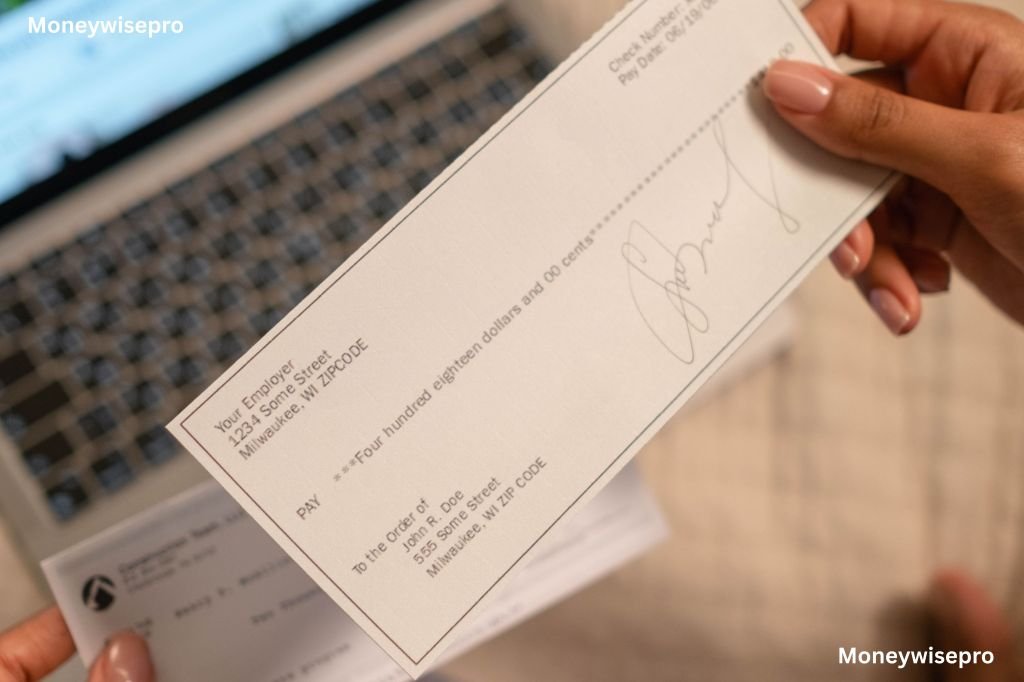
There’s a real federal rule behind this, not a random decision made by one branch manager. It’s called Regulation CC, part of the Expedited Funds Availability Act, and it sets the outer limit on how long a bank can legally hold your check before that money has to show up as usable.
For most deposits, the wait is short. A check under $275, a government check, a certified check, or one deposited in person with a teller usually has to be available by the next business day. A regular paper check over that amount, or one dropped into an ATM, typically gets one extra business day added on, so the money lands on day two instead of day one.
The wait gets longer once certain red flags show up. Banks can stretch a hold out to seven business days total when the account is less than 30 days old, when the deposit is over $6,725 in a single day, when the account has had repeated overdrafts in the past six months, when the check already bounced once and is being redeposited, or when the bank has a documented reason to doubt the check will actually clear. Brand new accounts depositing a large official check can be held even longer, up to nine business days on the part over $6,725. In every one of those cases, the bank is required to notify the account holder in writing, stating the reason for the hold and the exact date the funds become available.
A business day only counts Monday through Friday, and it skips federal holidays entirely, so a check deposited on a Friday afternoon does not really start its clock until Monday morning. That one detail explains a surprising number of confused calls to customer service on Tuesdays.
Here’s how long a bank can legally hold your check under the rules as they stand right now, laid out by deposit type.
Deposit Type Standard Hold Under Regulation CC Can It Be Extended Check under $275 Next business day Rarely Government or certified check Next business day Rarely Personal check over $275 Second business day Yes, up to 7 business days ATM deposit at the bank’s own machine Second business day Yes, up to 7 business days Deposit over $6,725 in one day Second business day for first $6,725 Yes, up to 7 business days on the rest New account, 30 days old or less Varies by bank policy Yes, up to 9 business days on large checks Redeposited check that already bounced once Varies by bank policy Yes, up to 7 business days That’s the rule as it stands today, and it’s the part almost every existing guide online stops at. What most of those guides leave out is that this rule is actually in the middle of changing.
Congress is currently working on a bill that could stretch the wait even further than seven days. The STOP Payments Fraud Act of 2026, introduced by Rep. Young Kim in June 2026 and already passed by the House Financial Services Committee, would let banks skip the standard availability deadlines entirely whenever they have a reasonable suspicion of fraud on a check or wire transfer. The bill does not set a new maximum in its place. Instead, it leaves the real cap up to future rulemaking by the Federal Reserve and the Consumer Financial Protection Bureau, which means the current seven day ceiling could stop being the actual ceiling at all.
This helps explain the timing:
My Bank Account Fees Are Eating My PaycheckThe reason lawmakers are pushing this is real money, not politics. FinCEN found banks reported $688 million in mail theft related check fraud in just a six month stretch, and current law forces a bank to release funds before its own fraud investigation is even finished. That gap between paying out the money and actually catching the fraud is exactly what this bill is trying to close.
The tradeoff cuts in two directions at once. A longer hold on a genuinely fraudulent check protects the bank, and indirectly protects every other customer from quietly absorbing that loss. A longer hold on a real, legitimate check just means a longer wait for someone who was counting on that money landing on schedule. The bill does include one real protection worth knowing about, if a bank delays funds under this rule and skips the required notice, it is not allowed to charge an overdraft fee for anything that bounces because of that delay.

There are a few things worth checking the moment a deposit shows as pending longer than expected. Ask the bank directly for the written hold notice, since federal rules require one for any extended hold, and it has to state the exact date the funds become available. Ask plainly whether the hold falls under the standard rules or one of the fraud-related exceptions, since the reason changes what can actually be done about it. An account holder who believes a bank ignored its own published hold policy can also file a complaint directly with the Consumer Financial Protection Bureau, which tracks exactly these kinds of funds availability disputes.
Watching a bank account for a deposit that has not cleared yet is a strange kind of waiting, somewhere between checking a phone for a reply and refreshing a delivery tracking number. Many Americans describe the same quiet frustration, not because the money disappeared, but because nobody actually explained why it is not there yet.
A hold that drags on for even a few extra days can turn into a real problem for anyone living close to the edge of their next paycheck, which is exactly why having something set aside matters so much before that gap ever opens up.
A hold like this is exactly the kind of gap a simple budget tracker can help catch early, before it turns into a bigger cash flow problem. There’s a free one available here if keeping tabs on deposits and spending sounds useful.
Worth reading next:
53% of Americans Can’t Cover a $1,000 Emergency. I’m Building Mine From Zero — Here’s My Plan.For now, the seven day rule is still the real limit for most everyday deposits. Whether that stays true depends on what happens the next time this bill reaches a full vote in the House, and on what the Federal Reserve and CFPB eventually decide counts as a reasonable extra wait once it passes. Many Americans who deposit checks regularly, freelancers, landlords collecting rent by mail, small business owners, may want to keep an eye on this one, since it is genuinely not settled yet.
None of this means every hold is unfair or a sign something went wrong. Rate hikes get explained by risk pools, and check holds get explained by fraud math, both are real, documented reasons, not random punishment aimed at one specific customer.
The next time a deposit sits there a little too long, is it the standard rule everyone agrees to when they open an account, or something new that has not even been finalized yet?
Disclaimer: MoneyWisePro is not a financial advisor, lawyer, or bank representative. This article is for general information only and is not financial or legal advice. Always check with your own bank or a licensed professional before making decisions about your account.
-
Your Cash Advance App Interest Rate Is Higher Than the Tip Makes It Look
Payday is three days away. The rent is due today. So you open an app, tap a button, and $80 lands in your account in minutes. The app calls the extra charge a tip. Nobody calls it what a cash advance app real interest rate actually works out to once you do the math.
Apps like Dave, Earnin, MoneyLion, and Brigit are now used by millions of Americans living paycheck to paycheck. They market themselves as a friendly alternative to overdraft fees and payday loans, not a loan product at all. Technically, the government agrees with them. That agreement is exactly why this matters right now.

In December 2025, the Consumer Financial Protection Bureau issued a formal advisory opinion stating that certain earned wage access products are not credit under the Truth in Lending Act. In plain English, that means these apps do not have to show you an APR the way a credit card or a payday lender legally must. No box on the screen. No number that makes you pause before you tap confirm.
This is not the first time the CFPB has flipped on this exact question. An earlier proposed rule would have treated earned wage access as a loan and forced real disclosure. The industry lobbied hard against it, and the advisory opinion effectively reversed course. Consumer advocates pushed back just as hard on the reversal. The National Consumer Law Center argues that earned wage payday loans are loans no matter what the label on the app says, and that the fee structure functions exactly like the short-term lending it was designed to replace. Two federal decisions on the same product, two years apart, landed in opposite places. That alone should tell you the cash advance app real interest rate was never a settled question, just a convenient one for the apps to avoid answering.
Here’s the math nobody shows you on the confirmation screen. Say you borrow $100 five days before payday and the app suggests a $5 tip plus a $3.99 instant-transfer fee. That’s $8.99 to borrow $100 for five days. Run that same fee structure for a full year, the way an APR calculation actually works, and it lands around 650 percent. A typical credit card sits under 30 percent. Even a payday loan, the thing these apps say they’re replacing, usually lands lower.
Cash Advance Product Typical Cost Estimated Annualized Rate Cash advance app (optional tip plus rush fee) $5 to $15 per $100, 5-10 day term Roughly 200% to 650%+ Traditional payday loan $15 per $100 borrowed, 14-day term Roughly 391% Overdraft fee $33 average, one-time charge on the shortfall Varies by shortfall size, often 1000%+ on small overdrafts Credit card cash advance ~5% fee plus ongoing APR Roughly 25% to 30% APR 
To be fair to these apps, they exist for a real reason. Many Americans reach for one specifically to dodge a $33 average overdraft fee or skip a payday lender charging 391 percent on paper, and for a single, occasional five-day gap, the app can genuinely be the cheaper option on the table. The real risk shows up when one advance turns into a standing habit, because the same paycheck now has a hole in it every single pay period, and the gap just gets a little wider each time.
You don’t have to guess whether one of these apps is quietly draining your paycheck every two weeks.
Worth knowing:
Buy Now, Pay Later Looked Smart. Here’s Why It’s Becoming a Debt Problem for Millions.Payactiv, one of the larger earned wage access providers, frames the CFPB’s decision as a genuine win for workers, arguing that treating early wage access like a loan would have buried a helpful benefit under paperwork most employers wouldn’t bother offering. That’s a fair point for someone using the feature once in a while through their employer, free of charge. It’s a very different product once you’re the one paying a fee out of your own pocket, every two weeks, through an app instead of your employer.
A few of these apps do let you skip the tip entirely and wait a day or two longer for the same money, and picking that free option every time you can is the single easiest way to keep the real cost near zero instead of near a payday loan. The tip button is usually set to a default amount before you even look at the screen, and lowering it or turning it off almost never changes how fast the advance arrives if you are not in a rush. Most people never touch that setting, which is exactly why the average fee keeps climbing across the industry year after year.
The same short-term cash gap shows up in a dozen other forms once you start looking for it.
If you are already juggling more than one of these short-term borrowing tools, it helps to see every due date in one place instead of guessing. Grab the free tracker here and get ahead of the next payment before it sneaks up on you.
Same principle applies:
Personal Loans: The New Debt Trap Americans Are Walking IntoOne question almost nobody asks before downloading a random app: does your own employer already offer earned wage access for free through a payroll benefit. A growing number of companies now partner directly with providers like Payactiv or DailyPay and cover the cost themselves, since it costs the employer little and keeps workers from quitting over a cash crunch. Checking your HR benefits page for that option first, before ever paying a tip to a consumer app, is the one step that can make this entire math problem disappear.
So before your next advance, do this instead of trusting the word tip. Add up every fee from the app over the last two pay periods. Divide by how many days the money was actually borrowed. Multiply by 365, then divide by the amount borrowed. That’s the real cash advance app interest rate for your own account, not the one on the confirmation screen.
None of this means the app is evil or that you made a bad call using it once. It means the word tip is doing a lot of work to keep that number off your screen, and now you know how to find it yourself.
That gap between a paycheck landing and a bill being due is where half of this entire industry lives, and closing even a small part of that gap yourself changes the math completely.
Check this:
Your Emergency Fund Isn’t What It Used to Be. Here’s What Changed.So next time the app asks for a tip before payday, are you going to check the real number first, or just tap confirm like always?
Disclaimer: MoneyWisePro is not a financial advisor. This article is for general information only and is not financial advice. Contact a licensed financial advisor before relying on any cash advance product for regular income shortfalls.
-
Canceling Your Gym Membership Shouldn’t Be This Hard, and a Court Just Made It Worse
Canceling your gym membership sounds like it should take five minutes. For a lot of people it still means driving back to the location that signed them up in the first place, standing in line, or mailing a certified letter and hoping it actually gets processed. A recent court decision means that frustration is not going away as fast as regulators promised it would.
In 2024 the Federal Trade Commission finalized a rule known as Click-to-Cancel, requiring that ending a subscription or membership be at least as easy as signing up for one. If a gym let people join online, the rule said, it had to let them cancel online too. That rule sounded like the fix millions of frustrated gym members had been waiting for, and then in July 2025 the Eighth Circuit Court of Appeals vacated it entirely, striking down the rule on procedural grounds before it ever took full effect nationwide.

That does not mean gyms are now free to make canceling as hard as they want. The FTC still enforces the Restore Online Shoppers Confidence Act, a law that requires clear disclosure of cancellation terms and, critically, a simple mechanism to stop future charges. The agency has already used it against real gyms. In a case still active in California federal court, the FTC alleges LA Fitness only let members cancel by showing up in person during limited hours or mailing a certified letter, despite offering full online enrollment. A judge’s tentative ruling in an April 2026 hearing leaned toward the FTC’s argument, and the agency also opened a new rulemaking process in January 2026 aimed at bringing a version of Click-to-Cancel back.
Worth knowing:
The Average American Wastes $205 a Year on Subscriptions They Don’t Even Use. I Found Mine Hiding in My Bank Statement.None of this friction is accidental in most cases. Gyms know that a member who signed up in January with real intentions is far more profitable once the motivation fades and the monthly charge keeps landing anyway. Industry analysts have long referred to unused, still-paying memberships as a normal and expected part of gym revenue, not a failure of the business model, which helps explain why the sign-up process gets streamlined into one click while cancellation stays stuck in 2005.
The money at stake is bigger than most people realize until they actually add it up. An estimated 67% of gym members rarely or never use the membership they are paying for, and one widely cited estimate puts the total wasted on unused gym memberships at roughly $1.3 billion a year across the US, though that figure comes from a single source and the exact number varies depending on how it is calculated. The average US gym membership ran about $69 a month in 2024, up from $65 the year before, while the median fee sat closer to $38. When canceling your gym membership takes multiple attempts or a trip nobody wants to make, that monthly charge just keeps quietly renewing.

Gym Type Typical Monthly Cost Budget gym $10 to $30 Mid-tier gym $40 to $70 Boutique studio $50 to $150 Premium club $150 to $300+ US average (2024) $69 Think about:
Why Do So Many Stores Charge You to Return Something Now?A few real habits make canceling your gym membership less painful even with the federal rule in limbo. Read the cancellation terms before signing, not after, since many gyms still require written notice or a specific number of days ahead of the billing date. The FTC’s own consumer guidance on free trials and auto-renewals recommends marking the renewal date on a calendar the same day you sign up, since that is the easiest moment to forget. Many states also have separate health club contract laws on top of federal rules, often including a short right to cancel within the first few days of signing, so it is worth checking state-specific consumer protection pages before assuming federal rules are the only ones that apply.

Some gyms also offer a pause option that stops the monthly charge for a set period without a full cancellation, and it is worth asking about before assuming the only choices are paying in full or going through a drawn-out cancellation process. A short pause during a busy month or an injury can quietly save the membership fee without triggering whatever cancellation hurdles the gym has built in, and it keeps the account active in case the plan is to come back later anyway.
I paid for a gym membership once, went a handful of times, and stopped showing up after about a month, and the charge kept quietly leaving my account long after I had stopped caring. Losing that money still bothers me more than almost any other purchase I have made, mostly because I know exactly how avoidable it was.
Same principle applies:
My Bank Account Fees Are Eating My PaycheckNone of this means every gym is acting in bad faith, and plenty of members genuinely do use what they pay for. The honest takeaway is narrower than that. The rule that was supposed to make canceling your gym membership as easy as joining one got struck down before it ever fully applied, the FTC is still willing to sue over cancellation practices that look designed to frustrate people, and a new rule attempt is already underway for 2026. Until any of that settles, the fastest fix is still the boring one, reading the contract before signing it.
Have you ever tried to cancel a gym membership and hit a wall you didn’t expect, like an in-person visit or a mailed letter?
Disclaimer: MoneyWisePro is not a lawyer or consumer protection attorney. This article is for general information only and is not legal advice. Check your specific gym contract and your state’s consumer protection laws for guidance on your situation.
-
The Real Reason Your First Paycheck Looks Smaller Than You Expected
You accept a job offer, you do the math on your new salary, and then your first paycheck looks smaller than you expected by a few hundred dollars or more. This catches almost every new employee off guard at least once, and it is not a mistake by your employer most of the time. It comes down to a mix of tax withholding, timing rules, and deductions that nobody explains clearly before your first day.
Start with taxes, because they take the biggest bite. Federal income tax, state tax, and Social Security and Medicare (FICA) all get pulled out automatically, and the combined hit is bigger than most people picture in their head. CNBC walked through a real example: someone earning $65,000 in New York City can lose close to 32% of that salary to combined federal, state, and city taxes, which works out to roughly $1,750 take-home on a biweekly paycheck instead of the $2,500 gross number the salary math suggests. That gap is not a fee or a glitch. It is the system working as designed, just rarely explained out loud.

Timing makes the first paycheck problem worse. Most companies do not pay you the moment you start working, they pay you after the pay period closes, a setup called paid in arrears. ADP lays out a typical example: start a job on a Monday, the two-week pay period ends the following Friday, and the actual paycheck does not arrive until the Friday after that. That is roughly two to three weeks of work before any money shows up, and if a new hire budgeted around their old job’s payday, that stretch can quietly wreck a month.
Worth knowing:
My Bank Account Fees Are Eating My PaycheckBeyond taxes and timing, pre-tax deductions shrink the number further before it ever hits your account. Health insurance premiums, dental and vision plans, and 401(k) contributions all come out before you see a dollar, and none of these show up on the salary figure printed on your offer letter. Someone who signs up for a solid benefits package on day one can watch their first paycheck look smaller than you expected by several hundred dollars compared to someone who waited a pay cycle to enroll, even at the exact same salary. It is one more reason a first paycheck looks smaller than you expected, well before the offer letter ever hinted at it.
Most workers genuinely do not understand where this money goes, and that is not a knowledge gap unique to any one generation, though it is worse for younger workers. A survey of 1,000 US employees by Method Research, run for Deel in February 2025, found that 29% of workers admit they are confused about their paycheck deductions, and only 27% of Gen Z employees feel confident explaining federal income tax withholding, compared with 63% of Baby Boomers. That confidence gap matters because Gen Z workers are also the ones most likely to be starting a first or second job right now, which is exactly when a first paycheck looks smaller than you expected and there is nobody around yet to explain why.

Category Biweekly Amount Share of Gross Pay Gross pay ($65,000 salary) $2,500 100% Federal income tax ~$550 ~22% State and local tax (NYC example) ~$245 ~9.8% Social Security and Medicare (FICA) ~$191 ~7.65% Approximate take-home pay ~$1,750 ~70% This helps:
Your Paycheck Isn’t Keeping Up With Inflation. And That’s Not Your Fault.Employers know this gap causes real stress, which is part of why earned wage access apps have grown fast in 2026. These tools let workers pull a portion of wages they have already earned before the official payday, for a small fee. According to the Wage to Wallet Index, a 2026 study by PYMNTS Intelligence, WorkWhile, and Ingo Payments, roughly 4 in 5 workers surveyed said their employer now offers some form of on-demand pay, yet only about 10% use it frequently. The honest read on that data is that most workers keep it as a backup, not a habit, and that is the smarter way to treat it. A few dollars per early withdrawal adds up fast if it becomes a monthly routine instead of a genuine emergency tool.
None of this means the deductions themselves are unfair. Federal and state taxes fund real public services, and FICA specifically funds Social Security and Medicare, programs most workers will eventually rely on. The frustration is not that the money disappears, it is that almost nobody explains where it goes before the first paycheck lands, so the surprise feels like a loss instead of what it actually is, which is the system working the way it was built to.
That gap between the number on an offer letter and the number that actually lands in the account catches nearly everyone off guard at least once. It tends to show up at the worst possible time, right when rent, a phone bill, or a car payment is already due.
Same principle applies:
Your Emergency Fund Isn’t What It Used to Be. Here’s What Changed.
A few real steps make this easier before it happens rather than after. Ask HR for the exact pay schedule and the exact date of the first payday before your first day, not after. Use the IRS withholding estimator to check that your W-4 matches your real situation, since a wrong W-4 is one of the few parts of this you can actually control. And if the arrears gap really does create a cash crunch, treat earned wage access as a one-time bridge, not a recurring paycheck substitute, given how quickly small per-use fees turn into a real cost over a year.
So if your first paycheck looks smaller than you expected, the honest answer is that it probably is not a mistake, and it is not a trick either, it is a system almost nobody explains clearly before the money shows up.
Did your first paycheck at a new job ever come in lower than you planned for, and if so, did anyone explain why before it happened?
Disclaimer: MoneyWisePro is not a financial advisor, accountant, or tax professional. This article is for general information only and is not financial or tax advice. Check your own pay stub and W-4 with your employer or a licensed tax professional for guidance specific to your situation.
-
Grocery Store Prices Can Now Change While You’re Still Shopping
The number on the shelf used to be the number you paid. That’s changing fast, and it’s exactly why so many people are asking whether grocery store prices can change while you’re still shopping. Walmart, Kroger, Schnucks, Whole Foods, and Amazon Fresh are all rolling out electronic shelf labels, small digital screens that replace paper price tags and can update instantly, sometimes multiple times a day.
Here’s the part that actually matters for a grocery budget. A digital tag isn’t just a paper tag with a screen instead of ink. It’s connected to a system that can raise or lower a price based on time of day, day of the week, or demand, the same basic idea behind how airline tickets and rideshare prices move.

Research firm Decodo tracked 1.5 million grocery items across 120 platforms and found real movement, not a rumor. Roughly half of prices went up and half went down over the study period, meat prices climbed 11.3% over six months while dairy and pantry staples actually dropped. The same research found prices tend to run highest on Saturdays and lowest on Wednesdays and Mondays at Walmart and Kroger specifically, according to reporting from First Alert 4.
That day-of-week pattern is worth sitting with for a second. If a store can quietly charge more on a Saturday, when most working families actually do their shopping, the person with the least flexible schedule pays the highest price without ever knowing a lower one existed two days earlier.
Related read:
82% of Americans Changed How They Shop for Groceries Last Year. Here’s What I Started Doing With Mine.This isn’t just a shopper’s hunch either. Senators Elizabeth Warren and Bob Casey sent Kroger a direct letter over exactly this concern, warning that electronic shelf labels could let stores raise the price of a turkey right before Thanksgiving, or ice cream on a hot day, timed to whenever demand is highest. The letter cited a 2021 UCLA analysis concluding that time-based pricing creates value for the store through higher prices while offering the shopper nothing back.

The financial backdrop makes the concern harder to wave off. Grocery spending already ate up 11.2% of the average household budget in 2023, a 30-year high, while Kroger alone reported 3.1 billion dollars in operating profit that year with gross margins above 20% for five straight years. When a company adds a tool that can move prices by the hour, and profit margins are already that strong, the burden of proof shifts to explaining why prices would only ever move down.
Retailers are pushing back on the dynamic pricing label specifically. Walmart has stated its digital tags cannot be used for what it calls surveillance pricing, and Schnucks says it doesn’t use dynamic pricing at all, attributing price changes to supplier and logistics costs instead of demand. Those denials are worth taking seriously, but they don’t change the underlying fact that the technology to move prices by the hour now exists in more stores than it did a year ago.
Data point Detail Items tracked (Decodo study) 1.5 million, across 120 platforms Meat price change (6 months) +11.3% Dairy and pantry staples Declined over same period Highest price day Saturday Lowest price days Monday and Wednesday Kroger FY23 operating profit $3.1 billion None of this means every grocery store with a digital tag is quietly gouging shoppers. Some of these systems genuinely exist to cut down on the labor cost of printing and swapping thousands of paper tags by hand, and price drops happen just as often as increases in the actual data. The real issue isn’t that grocery store prices can change while you’re still shopping, it’s that most shoppers still assume the shelf price is fixed for the day, when it increasingly isn’t.
Also useful:
I Was Shocked When I Saw My Grocery Bill Last WeekThere’s a privacy layer to this too that’s easy to miss. The Warren-Casey letter also flagged that Kroger has explored facial recognition cameras tied to personalized pricing, the idea being that a store could eventually learn how much a specific shopper is willing to pay and price accordingly. That’s a different, more targeted version of the same underlying shift: the price is no longer a fixed fact printed on a tag, it’s a number a system decides for that moment.

The practical fix doesn’t require new technology on the shopper’s side. Since the data shows prices trending lower earlier in the week, shifting a grocery run to Monday or Wednesday instead of the weekend is a real, free way to land on the cheaper side of the same item. It’s a small habit, not a guarantee, but it’s grounded in the actual pattern the research found rather than a guess.
Worth trying:
10 Easy Ways to Save Money Every MonthChecking a receipt against the shelf price is also worth doing more than most people bother to. Many states have laws requiring a refund or a free item if a scanner rings up higher than the posted shelf price at the time of purchase, though the exact rule varies by state and isn’t guaranteed everywhere. A photo of the shelf tag before checkout, taken with a phone already in hand, costs nothing and settles the question fast if the total looks off.
Many Americans grew up assuming a grocery store’s prices were the same for everyone walking through the door that day. That assumption is quietly getting more complicated as digital shelf tags spread to more chains, and the shift is happening well before most shoppers have any reason to notice it.
None of this means grocery shopping needs to become a research project every week. It means the sticker on the shelf is worth a second look now, since grocery store prices can genuinely change while you’re still shopping, not because it’s wrong, but because it might already be different from what it was an hour ago.
Have you noticed a grocery price change between visits to the same store recently, or is this the first time you’re hearing digital tags could be why?
Disclaimer: MoneyWisePro is not a financial advisor, lawyer, or retail industry professional. This article is for general information only and is not financial advice. Always check with your local consumer protection office regarding pricing laws in your state.
-
Why Do So Many Stores Charge You to Return Something Now?
A few years ago, returning something you didn’t want was simple. Print a label, drop the box off, get your money back. That’s not how it works at most stores anymore, and why do stores charge you to return something now is turning into one of the most common questions shoppers type into Google before they even try. The honest answer is that returns quietly became one of retail’s biggest cost problems, and stores decided shoppers should help cover it.
So do returns cost money now? For most major retailers, yes. It is no longer a free undo button on a purchase, and shoppers who assume otherwise are the ones most likely to get surprised by a smaller refund.
Here’s what most people don’t realize until the fee shows up on their refund. Nearly three-quarters of retailers now charge for at least some returns, up from 66% just last year, according to industry data reported by TheStreet. This isn’t a handful of stores testing something new. It’s become the normal way retail operates now, and it happened fast enough that a lot of shoppers haven’t caught up to it yet.

The reason stores added these fees isn’t complicated once you see the math. A Pollen Returns co-founder explained it plainly to Today.com: just processing a single returned item can cost a retailer around $12, and that figure doesn’t even include restocking or the loss from reselling that item at a markdown later. Multiply that by millions of returns a year, and free returns stopped making financial sense for a lot of companies. That cost is the real reason why stores charge you to return something in the first place, not an attempt to punish anyone for changing their mind.
The scale of returns is genuinely enormous. Retailers expect billions of dollars in merchandise to come back through their doors and warehouses this year alone, and online orders get returned at a noticeably higher rate than anything bought in person. A return fee, from the store’s side, isn’t about punishing shoppers. It’s about not eating a cost that used to be invisible to everyone except the finance department.
Related read:
The Average American Spends $3,045 a Year on Impulse Buys. I Almost Became One of Them Last Week.What makes this expensive for shoppers is that the fees aren’t small or one-size-fits-all. Marshalls and T.J. Maxx deduct close to $12 for a mailed-back return. Macy’s takes about $9.99 off the refund unless the shopper is enrolled in its loyalty program, which waives it. JCPenney and J.Crew fall in the $7 to $8 range, Zara charges roughly $4.95, Urban Outfitters takes $5, and Dillard’s adds close to $9.95 on top of any restocking charge. Best Buy goes further with electronics specifically, applying a restocking fee on opened items and a separate, steeper charge on activatable devices like phones and tablets.

Kohl’s takes a similar approach, applying a restocking percentage on non-defective items and treating shipping costs as non-refundable no matter what. None of these numbers sound huge in isolation. A $9.99 fee here, an $8 fee there. But for anyone who orders two or three sizes of the same shirt to try on at home, a habit called bracketing that a large share of younger shoppers openly admit to doing, those small deductions add up across every single return.
Retailer Typical Return Fee Fee Type Marshalls / T.J. Maxx ~$11.99 Mail-return shipping fee Macy’s ~$9.99 Waived for loyalty members JCPenney ~$8.00 Mail-return shipping fee Best Buy 15% / up to $45 Restocking (electronics) Kohl’s 15% Restocking (non-defective) This is where the fee structure quietly changes shopping math that most people never think to run. Buying something on impulse used to carry almost no risk, since the worst case was a quick, free return if it didn’t work out. Now the worst case includes losing $5 to $12 of your own money just to undo a purchase you never should have made in the first place. Why do stores charge you to return something has a straightforward answer, but the ripple effect on everyday spending decisions is the part that catches people off guard.
Also useful:
Your Emergency Fund Isn’t What It Used to Be. Here’s What Changed.Retailers are watching consumer reaction closely, and the numbers suggest the fees are already creating friction. Close to half of merchants that started charging for returns report a real increase in customer complaints, and more than a third say they’ve lost repeat customers specifically because of the new fees. Shoppers care about return policy more than a lot of retailers may want to admit, with a large majority saying a store’s return terms factor directly into whether they buy there in the first place.
There are still ways to avoid most of these charges without giving up online shopping altogether. Loyalty programs are the biggest lever, since several major retailers, including Macy’s, waive the return fee entirely for members, and signing up costs nothing. In-store returns are another workaround, since many of the fees only apply to mail-back returns, not items brought back to a physical location in person.

Reading the return policy before checkout, not after the package arrives, is the simplest habit that actually prevents a surprise deduction. A lot of stores post the fee structure directly on the product or shipping page, and a thirty-second check before buying is a lot cheaper than an unwanted fee after the fact.
One workaround most coverage of this trend skips entirely: choosing store credit or an exchange over a cash refund. Many retailers waive the return fee specifically when a shopper accepts a gift card or swaps for a different size or item instead of asking for money back. It only works if there’s something else in the store actually worth buying, but for anyone planning to shop that retailer again anyway, it’s a real way to skip the deduction entirely instead of eating it every time.
Ties into this:
My Bank Account Fees Are Eating My PaycheckMany Americans grew up with the assumption that returns were simply free, a built-in safety net for buying the wrong size or changing their mind. That assumption quietly expired over the last couple of years, and most people only find out the hard way, when a smaller-than-expected refund lands in their account. Watching that number shrink for no obvious reason is a strange kind of frustrating, and it usually takes checking the original order page to even understand what happened.
None of this means returns are going away, or that shopping online has become a trap. It means the old habit of buying loosely with the plan to just return whatever doesn’t work out now comes with a real cost attached, one that’s easy to avoid with a little more intention before checkout instead of after.
Before your next online order, is checking the return policy already part of your routine, or does the fee usually show up as a surprise?
Disclaimer: MoneyWisePro is not a financial advisor, lawyer, or retail industry professional. This article is for general information only and is not financial advice. Always check the specific return policy of any retailer before making a purchase.
-
Auto Loan Delinquencies Just Broke a 32-Year Record. Here’s Why the Average Car Payment Got This High.
More drivers missed a car payment in early 2026 than at any point since 1994, and that alone explains why the average car payment so high in 2026 keeps showing up as a real search question. The number isn’t a rumor. Serious auto loan delinquencies climbed past the peak set during the Great Recession, and the payments behind those missed bills are bigger than they’ve ever been.
Here’s the part that doesn’t get said enough. This isn’t happening because people suddenly got worse at managing money. It’s happening because the price of an average car climbed faster than paychecks did, and lenders responded by stretching loan terms longer instead of asking buyers to spend less.
A 60 or 72 month car loan used to be considered long. Now 72, 84, and even 96 month terms are common, with some credit unions offering 10 year auto loans. Stretching the term shrinks the monthly number on paper. It does nothing to shrink the total amount owed, and it keeps a driver financially attached to a depreciating car for years longer than before.

That’s where the real trap shows up. According to recent auto lending data, the average car payment for a new vehicle is now $774 a month, and a used car averages $563. Add average full coverage insurance of roughly $225 a month, and a new car alone can run close to $999 a month before gas, maintenance, or registration. That’s a second rent payment for a lot of households, just to keep a car on the road.
Longer loans also feed a second problem that compounds the first: negative equity. When someone trades in a car before the loan is paid off, and the car is worth less than what’s still owed, that gap doesn’t disappear. It gets rolled into the new loan. Edmunds data shows that 26.6% of new car trade-ins carried negative equity in the most recent quarter, averaging $6,754 owed on a car that no longer exists in the driveway. That amount gets tacked onto the next loan, which is exactly how a manageable payment turns into an unmanageable one two or three cars later.
Think about:
Personal Loans: The New Debt Trap Americans Are Walking IntoThe delinquency numbers reflect all of this piling up at once. Subprime auto loan delinquencies hit their highest level in 32 years this year, and separately, the broader serious delinquency rate covering all auto loans has climbed past its own 2010 Great Recession peak too. Subprime borrowers are getting hit hardest by both trends, and they’re also the same group most likely to be offered the longest loan terms and the highest interest rates to begin with. A driver who couldn’t quite afford the payment on day one has the least room to absorb a job loss, a medical bill, or even a smaller emergency later.

None of this means every long-term car loan is a mistake. A 72 month loan on a reliable car, at a payment that’s genuinely small relative to income, with no negative equity rolled in from a previous vehicle, isn’t the same problem described here. The danger isn’t the number of months on the contract. It’s financing a car based on what payment fits into a budget today without asking what that payment locks in for the next six or seven years, especially with nothing set aside if income drops.
There’s a simple check worth doing before signing anything. Look up the car’s real trade-in value against the exact payoff amount on the current loan, not a guess, before deciding whether to trade in at all. If the payoff is higher than the trade-in value, that gap is real money, and rolling it into a new loan just moves the debt forward with interest attached. Sometimes the better move is paying down the current loan a while longer instead of trading in early.
This is why:
Average American Owes $6,715 in Credit Card Debt. The Fed Just Made That Number More Painful.It’s also worth running the math on total cost, not just the monthly payment. A shorter loan with a higher monthly payment often costs less overall once interest is added up, even though it looks scarier on the dealership’s payment sheet. Dealers are trained to sell a monthly number, not a total cost, and that’s exactly the number that hides how much interest gets paid over 84 or 96 months.
Here’s a quick comparison of how the numbers have shifted:
Category Typical several years ago 2026 Trend Average new car payment ~$650/month $774/month Rising Average auto loan term ~60-68 months 72-96 months common Stretching longer Serious delinquency rate Below 2010 peak Above 2010 peak (series record) Worsening Trade-ins with negative equity Lower share 26.6% Rising Car insurance is the other half of this monthly number that often gets underestimated before signing a loan.
Learn this:
Your Car Insurance Renewal Just Went Up. Here’s Why, Even With a Clean Record.None of this is about avoiding car ownership altogether. Most people need a working car, and a loan is often the only realistic way to get one. The actual fix is treating the total cost and the term length as seriously as the monthly number on the sticker, since the average car payment quoted at the dealership rarely includes what a loan actually costs over its full term, and checking real trade-in equity before adding a new loan on top of an old one. That’s the difference between a car payment that fits a budget and one that quietly runs it.
A car loan that looked fine on the lot can stop looking fine the moment something else in the budget breaks. The record delinquency numbers this year are proof that a lot of people are finding that out the hard way, not because they’re careless, but because the payment was stretched thin from the very first month.
Before signing the next car loan, or before trading in the current one, is the real payoff number something you’ve actually checked, or just the monthly payment the dealer showed you?
Disclaimer: MoneyWisePro is not a financial advisor, lawyer, or auto lending professional. This article is for general information only and is not financial advice. Always check with your own lender, credit union, or a licensed financial professional before making decisions about auto financing.