

Something big happened in American finance today.
Starting July 4, millions of kids across the US just got access to a brand new kind of savings account.
It’s called a Trump Account. And it comes with free government money attached.
Have you heard of it yet? A lot of parents haven’t.
Here’s the simple version. Eligible kids under 18 get a one-time $1,000 deposit from the federal government.
That money goes into an investment account. It grows over time, in the stock market.
Parents, grandparents, and other family members can add up to $5,000 more every year.
Employers can chip in too. Up to $2,500 a year, if a company decides to offer it as a benefit.

The money stays locked until the child turns 18. No withdrawals before that, no exceptions.
Once the child turns 18, the account becomes a regular retirement account. It works a lot like a traditional IRA from there.
Sounds simple, right? But here’s where it gets interesting.
Some financial experts say these accounts could grow to over $200,000 by the time a kid turns 55 — if the market performs like it has in the past.
That’s just from the free $1,000. No extra contributions needed.
If a family adds the full $5,000 every year on top of that, some projections go as high as $13 million by retirement age.
But other experts are more cautious. Nobody can promise the market will keep growing at the same pace it has before.
| Family Income Level | Free Government Gift | Annual Family Additions | Projected Age 55 | Age 30 Estimate |
|---|---|---|---|---|
| Lower Income ($30K/year) | $1,000 | $0-500 | $50,000-75,000 | $2,500 |
| Middle Income ($60K/year) | $1,000 | $2,500-3,000 | $400,000-600,000 | $25,000 |
| Upper Income ($120K+/year) | $1,000 | $5,000/year | $200,000-13M+ | $150,000 |
Learn more: You Might Already Have Enough Money to Retire
How do you actually sign up?
Parents can enroll a child through a tax form called IRS Form 4547, filed with their tax return.
Or you can go straight to TrumpAccounts.gov and sign up there directly.
After that, there’s a Trump Accounts app you download to check on the account and manage it going forward.
A scam warning worth knowing
The government has already warned people about this. Official emails only come from one address: no-reply@trumpaccounts.treasury.gov.
If anyone calls or texts you about a Trump Account, don’t respond. That’s not how the real program contacts you.
Always type TrumpAccounts.gov into your browser yourself. Never click a link someone sends you.
The Bigger Question Underneath All of This
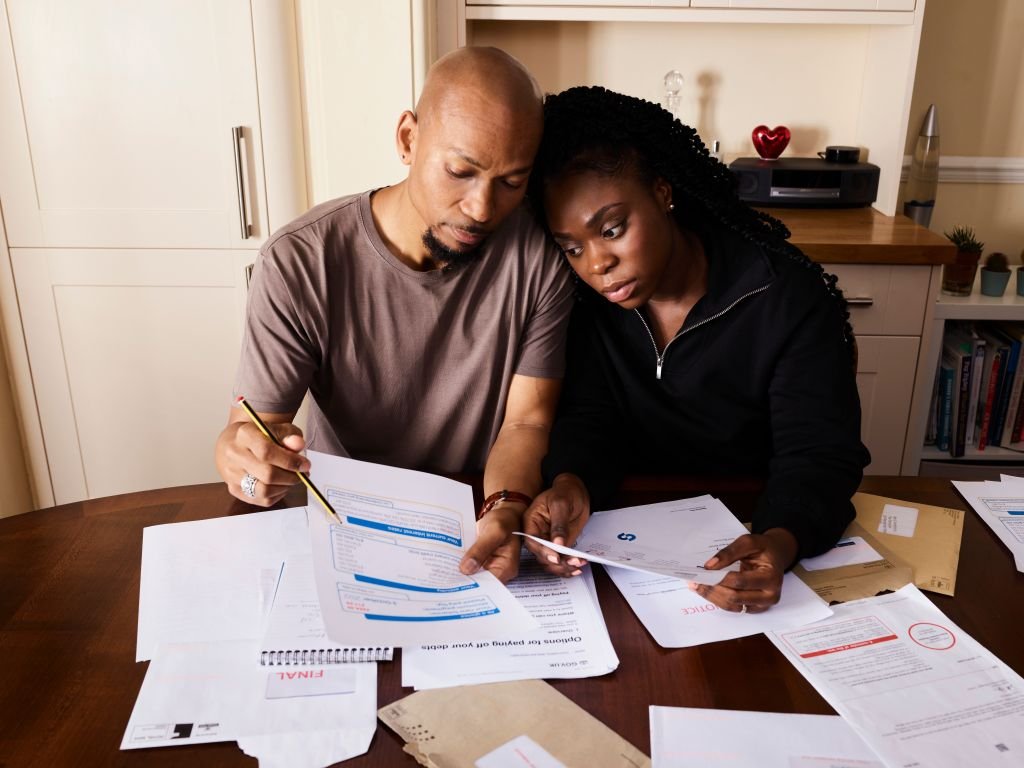
Wealthier families can afford to add the full $5,000 every single year.
Lower-income families often can’t. So the gap between rich and poor families may not close. It may just get pushed 18 years down the road.
One researcher estimated a wealthy family could build $150,000 for their child by age 30. A lower-income family might end up with closer to $2,500.
Is a free $1,000 still worth taking? Most experts say yes — free money is free money.
But is it a real fix for the wealth gap, or just a head start that favors people who are already ahead?
How This Compares to a 529 Plan
Many parents already have money in a 529 college savings plan, so it is worth knowing how this is different.
A 529 plan is usually meant for education costs, and withdrawals for anything else can trigger taxes and penalties. A Trump Account is not restricted to education. Once the child turns 18, it converts into a retirement style account instead.
You do not have to pick one over the other. Many families will end up using both, since they cover different goals.
What You Will Need Before You Sign Up
Before you sit down to enroll, have a few basics ready so it does not take longer than it needs to.
You will need your child’s Social Security number, their date of birth, and your own tax information, since enrollment usually happens through your tax return or directly through the official site.
Try this: Gather these documents in one place tonight, so when you do sit down to enroll, it takes five minutes instead of turning into a whole afternoon.
Track It With a Free Tool So It Is Not Out of Sight, Out of Mind
This account will not need your attention every week. That is actually the risk. Money that sits quietly for 18 years is easy to forget about completely.
A simple fix: use a free spreadsheet or a free budgeting tracker app to add one line for this account. Check the balance once or twice a year, not obsessively, just enough to know it is still growing.
Try this: Create one line item in a free tracker app or a simple spreadsheet titled with your child’s name and this account. Set a reminder for every January to check in on it.
What Happens If the Rules Change Before Your Child Turns 18
Government programs sometimes change over time, and it is fair to ask what happens to money already inside the account if that happens.
Money already deposited into an account like this generally stays with the account. Future rules about new contributions could change, but that is a different question from what happens to money already sitting inside.
Nobody can promise what happens 10 or 15 years from now. That uncertainty is real, and it is worth knowing rather than assuming the current rules are locked in forever.
Quick Questions Parents Are Asking
Does my child need a Social Security number already? Yes, this is required to open the account.
What if I have more than one child? Each eligible child gets their own separate account and their own $1,000 deposit.
Is the $1,000 taxed when it goes in? The deposit itself is not counted as your income. Talk to a tax professional about how growth and future withdrawals are taxed.
If you’re a parent in the US, have you signed up your child yet? Or are you still deciding if it’s worth it?
Tell me what you think in the comments below.
See also: You’re Allowed to Save an Extra $7,500 for Retirement
Disclaimer: This article is for educational purposes only and should not be considered as financial or investment advice. Market performance projections are hypothetical and not guaranteed. Consult with a qualified financial advisor before making investment decisions for your child.

















Leave a Reply