Tag: money-habits

  • 48% of Americans Made a Real Money Comeback in 2026 — Here’s What They Actually Did

    48% of Americans Made a Real Money Comeback in 2026 — Here’s What They Actually Did

    Why are fewer Americans living paycheck to paycheck this year? A new survey just found something unusual: the share dropped from 69% to 48%, the biggest one-year drop the survey has ever recorded.

    That’s not a small shift. For years, that number only climbed. Now it’s falling fast, and most people haven’t even heard about it yet.

    Living paycheck to paycheck means having almost nothing left over after bills each month. One missed shift, one car repair, and the whole budget collapses. For over half of working Americans, that was daily reality just twelve months ago.

    Woman looking at a bank statement with a calmer, more relieved expression at her kitchen table

    So what actually changed? According to the Debt.com 2026 survey of over 1,000 Americans, the drop lines up with two things happening at once. Inflation cooled off from its recent highs, and more people started actively budgeting than ever before, with 53% now tracking a monthly budget compared to under half a few years ago.

    That second part matters more than people realize. A separate five-year study found that budgeting habits climbed steadily even as financial anxiety rose, which suggests people didn’t wait for the economy to fix itself. Many Americans changed their habits first, and the numbers followed.

    Not everyone is seeing the same improvement though. The drop was sharpest among people who already had some financial cushion to work with. Households already carrying heavy debt or supporting kids on a single income still report living paycheck to paycheck at far higher rates than the national average.

    Couple reviewing household spending and paperwork together at the kitchen table

    This is why the number matters even if your own situation hasn’t changed yet. A national average dropping doesn’t mean the pressure disappeared everywhere. It means enough people found breathing room that the overall trend shifted, while plenty of households are still stuck exactly where they were.

    Check this: if your income situation is part of what’s holding you back, credit isn’t always the reason people assume.
    Your Income Doesn’t Affect Your Credit Score. Here’s What Actually Does.

    There’s a counterargument worth taking seriously here. Some economists point out that wages still haven’t caught up with prices in every sector, and that a survey asking people how they feel about their finances can shift based on mood as much as actual numbers. A Bankrate survey from the same period found that most Americans still don’t have enough saved to cover three months of expenses, even with the paycheck-to-paycheck number improving. Feeling less stretched month to month and being financially secure are not the same thing.

    That gap is worth sitting with. Getting through the month without running out of money is progress. It’s not the same as having a real cushion for when something actually goes wrong. Nobody feels rich just because the bills got paid on time for once. That relief is real, but it fades fast the moment something unexpected shows up.

    Person setting up an automatic savings transfer using a banking app on their phone

    Same principle applies here as it did during the worst stretch of inflation. Small, automatic habits tend to outperform big one-time efforts. Setting even $20 a week to move automatically into savings does more over a year than waiting for a bonus or tax refund to catch up all at once.

    If the national trend is finally turning, the smartest move isn’t to relax. It’s to use whatever extra room shows up in the budget to build the safety net most people still don’t have.

    Learn this: the amount recommended for true financial safety hasn’t gone anywhere, even while the paycheck-to-paycheck number drops.
    Your Emergency Fund Isn’t What It Used to Be. Here’s What Changed.

    YearLiving Paycheck to PaycheckHave a Monthly Budget
    2021Not tracked in this format47%
    202569%Not tracked in this format
    202648%53%

    The takeaway isn’t that the money problems are solved. It’s that real behavior change, tracked in real surveys, actually moves the needle over time. That’s rare good news in personal finance, and it deserves attention even if your own numbers haven’t caught up yet.

    Has your own month-to-month budget gotten any easier this year, or does it still feel the same as it did in 2025?

    Disclaimer: This article is for general informational purposes only and does not constitute financial advice. Individual financial situations vary. Consult a licensed financial advisor for guidance specific to your circumstances.

  • The Average American Wastes $205 a Year on Subscriptions They Don’t Even Use. I Found Mine Hiding in My Bank Statement.

    The Average American Wastes $205 a Year on Subscriptions They Don’t Even Use. I Found Mine Hiding in My Bank Statement.

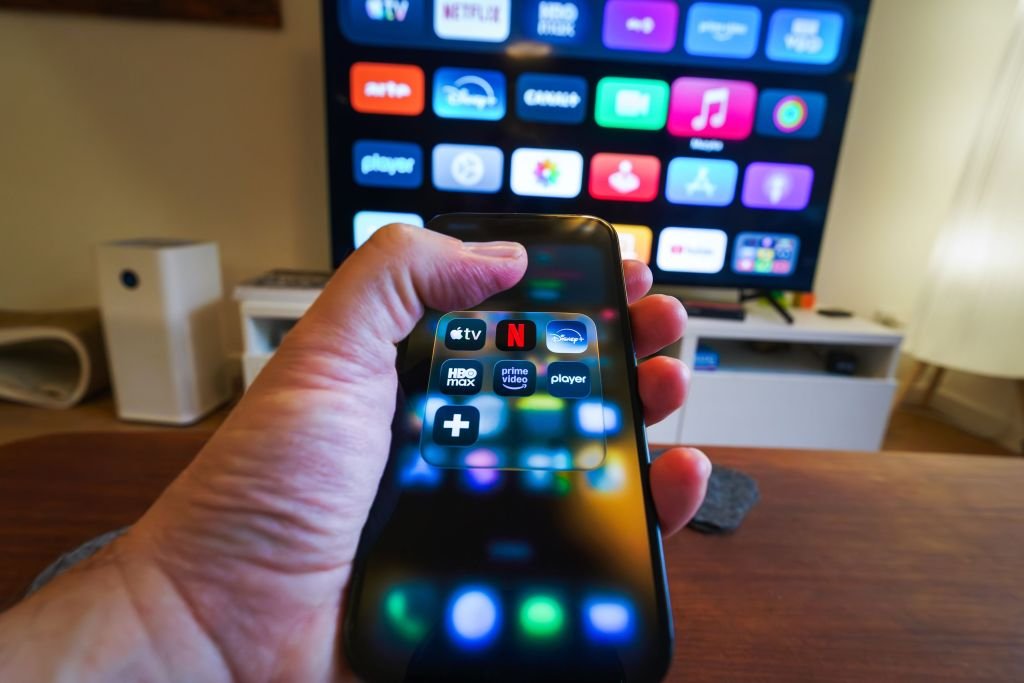
    A smartphone screen showing multiple subscription app icons

    I almost didn’t look. Scrolling through my bank statement felt boring, something to do later. Then I saw a charge I didn’t recognize, small, quiet, exactly the kind of thing you stop noticing after a few months.

    When I found that first forgotten subscription, I was embarrassed. How could I not notice $12 leaving my account every month? Then I found another. And another. That’s when I realized this wasn’t carelessness — it was exactly how these services are designed to work.

    Turns out that’s incredibly common. A May 2025 survey of over 2,400 Americans found people waste an average of $205 a year on subscriptions they aren’t even using anymore. Not big dramatic charges — just small ones nobody remembers to cancel.

    Have you actually looked at everything being pulled from your account this month, or are you guessing?

    Related: 37% of Americans Still Budget With Pen and Paper

    The bigger gap most people don’t see

    That same 2025 survey found the average person spends about $1,080 a year on subscriptions total — roughly $90 a month. But here’s where it gets interesting: an older, still widely-cited analysis (from 2022, but journalists keep referencing it because nothing’s replaced it) found that when people actually itemize every single subscription line by line, the real total often comes out closer to $219 a month — nearly two and a half times what people guess when just asked casually.

    Subscription MetricAmountSourceDateSample Size
    Annual Waste (Unused)$205/year2025 SurveyMay 20252,400+ Americans
    Total Annual Spending$1,080/year2025 SurveyMay 20252,400+ Americans
    Monthly Average Claimed$90/month2025 SurveyMay 2025Average
    Actual Monthly Total$219/month2022 Analysis2022Referenced study
    Underestimation Gap2.5xBoth studiesComparisonPattern
    People Who Canceled25%2025 SurveyMay 2025Survey respondents

    I’ll be honest about that gap: the exact number depends on which study you look at, and they don’t fully agree. But the pattern is the same in both: almost everyone underestimates what they’re really paying, sometimes by a lot.

    Check this too: 5 Simple Ways to Save $100 This Month

    A bank statement and receipts spread out on a desk

    Why it’s so easy to lose track

    A $5 charge here, a $12 charge there — none of it feels like real money in the moment. It’s not like handing over cash. It just quietly leaves your account every month whether you’re using the thing or not.

    25% of people in the 2025 survey said they’ve already canceled a subscription specifically because of money worries. That tells you something: a quarter of people already know they’re bleeding money slowly, and did something about it.

    Do you know exactly what’s on your own list right now, without checking?

    What I actually did about it

    I went through three months of my own bank history, not just the last one — a single month can miss something you’re only charged for occasionally.

    I wrote down every recurring charge I found, no matter how small, even ones I didn’t remember signing up for.

    For each one, I asked myself honestly: have I used this in the last 30 days? If the answer was no, I canceled it right there, before I could talk myself out of it.

    A person canceling a subscription service on their phone

    It took maybe twenty minutes. That’s less time than most people spend deciding what to watch on one of those subscriptions.

    The fact that it only took twenty minutes made me angrier. I’d been losing almost $200 a year and all I needed was those twenty minutes to stop it. That’s the trap — it’s so easy to ignore until you finally look.

    Do you think you’d find something if you actually looked at your last three months, or are you already sure there’s nothing there?

    Explore: I Cut My Coffee, Dessert, and DoorDash

    Disclaimer: This article is for educational purposes only and should not be considered as financial advice. Subscription costs and spending patterns vary by individual. Consult with a qualified financial advisor before making financial decisions.

  • 37% of Americans Still Budget With Pen and Paper. I’ve Been Doing the Exact Same Thing — And It Actually Works.

    37% of Americans Still Budget With Pen and Paper. I’ve Been Doing the Exact Same Thing — And It Actually Works.

    A handwritten budget notebook with a pen on a table

    I don’t have a fancy budgeting app. I don’t have a spreadsheet with color-coded tabs. Most months, I’ve just got a notebook, a pen, and a number in my head that can’t go below zero.

    Turns out, I’m not alone. A new 2026 survey just found that 37.27% of Americans still budget with plain pen and paper — more than any app, spreadsheet, or advisor. Mobile apps come in at just 21.70%.

    Do you track your money with an app, a notebook, or just by watching your bank balance nervously?

    The numbers behind the habit

    Almost 85% of Americans say they budget now, according to Debt.com’s 2026 survey of over 1,000 people. And 87.67% of them say it actually helped — either getting them out of debt, or keeping them out of it.

    This connects: I Cut My Coffee, Dessert, and DoorDash

    Here’s the harder truth, from a bigger, more established tracker (LendingClub/PYMNTS, May 2026): 62% of Americans are still living paycheck to paycheck. Even among people who don’t feel “poor,” about a third can’t cover a surprise $400 expense. This isn’t a problem that’s going away — it’s why budgeting keeps becoming more popular, not less.

    When I tried apps, I felt like I was supposed to be more organized than I actually am. A notebook doesn’t judge you. It just lets you see the truth every day without any pretense.

    An empty wallet with a few coins on a table

    Why people quit budgeting — and why I never could

    The Debt.com survey also asked people why they DON’T budget. The number one reason now isn’t “I don’t have enough money” — that’s actually dropped in their survey. The new top reason: 34.21% say it’s simply too time-consuming.

    Worth reading: 53% of Americans Can’t Cover a $1,000 Emergency

    Budgeting MethodPercentageSurvey SourceDateSample Size
    Pen & Paper37.27%2026 Survey2026N/A
    Mobile Apps21.70%2026 Survey2026N/A
    People Who Budget85%Debt.com 202620261,000+
    Say It Helped87.67%Debt.com 20262026Of 85%
    Paycheck to Paycheck62%LendingClub/PYMNTSMay 2026Large
    Can’t Cover $400~33%LendingClub/PYMNTSMay 2026General population
    Too Time-Consuming Reason34.21%Debt.com 20262026Of non-budgeters
    Rising Costs = Important95.15%Debt.com 20262026Survey respondents

    I get that. But when your income is zero some months, you don’t get to call it time-consuming. You write down every rupee, every dollar, every fee, because there’s no cushion if you get it wrong.

    Have you ever budgeted so tightly that a $5 mistake actually mattered? That feeling doesn’t show up in most finance articles, but it’s real for a lot of us.

    Writing it down by hand makes it real in a way an app never does. You can’t ignore the numbers when you’re physically writing them. That friction is actually the thing that works.

    What I actually do, in three steps

    Every night, I write down exactly what came in and what went out that day — no rounding, no skipping small stuff.

    Once a week, I check one number: what’s left until the next payment I’m expecting. Not my whole balance, just that one number.

    Before I spend on anything that isn’t food, internet, or a bill, I ask myself: would I still buy this if I had to write it down in front of someone?

    A hand writing numbers in a notebook next to a calculator

    95.15% of people in the Debt.com survey said rising costs have made budgeting feel more important than ever. Not optional. Necessary.

    Do you think you’d budget differently if you had to write every number down by hand instead of letting an app do it quietly in the background?

    Try this approach: 5 Simple Ways to Save $100 This Month

    Disclaimer: This article is for educational purposes only and should not be considered as financial advice. Budgeting methods vary by individual circumstances. Consult with a qualified financial advisor before making financial decisions.