Tag: housing-costs

  • Why Did Your HOA Fee Jump the Moment You Closed on the House?

    Why Did Your HOA Fee Jump the Moment You Closed on the House?

    You signed the closing disclosure, budgeted around the exact HOA fee it listed, and felt good about the number. Then the first real statement showed up higher, and it kept climbing every few months after that. If your HOA fee jumped right after closing, you are not imagining it, and you are far from alone in 2026.

    Homeowners associations are not a niche detail anymore. Nearly 43.6% of U.S. homes listed for sale in 2025 carried an HOA, up from 41.9% in 2024 and just 34.3% back in 2019, according to a Realtor.com analysis distributed through PR Newswire. New construction leans even further into this pattern. About 84% of newly built U.S. homes sold in 2022 came with an HOA already attached, according to Associa, one of the largest HOA management companies in the country.

    The real issue is not that HOAs exist. It is that the fee written on a closing disclosure is a snapshot of one moment, not a promise about what comes next. Many Americans discover that gap only after they have already signed, when a routine board meeting quietly raises dues or drops a special assessment notice into the mailbox a few months later.

    Close-up of a hand signing an offer to purchase real estate document with a black pen

    The national number alone tells part of the story. The median HOA fee climbed to $135 a month in 2025, up 8% from $125 in 2024, per that same Realtor.com report. Two forces are driving most of the increase. Climate-related insurance costs have pushed premiums higher across entire regions, and legislative changes following the 2021 Surfside condo collapse have added real pressure on associations to build up reserves and run more frequent structural inspections. Miami-Fort Lauderdale shows what that looks like at the extreme end, with a median HOA fee of $617 a month, which works out to 26.9% of a typical mortgage payment in that metro alone.

    Florida is where the newer 2026 pressure is sharpest. House Bill 913 pushed the deadline for completing Structural Integrity Reserve Studies to December 31, 2025, and buildings that were coasting on underfunded reserves for years are now catching up all at once. Special assessments in older coastal buildings have ranged from $10,000 to more than $100,000 per unit, and reporting from SavingAdvice.com found some owners watching their total monthly housing cost double in under two years. Miami-Dade County now offers assistance loans up to $50,000 with 40-year repayment terms for households under 140% of the area median income, which is a real sign of how serious the gap has gotten for regular families, not just for outlier cases.

    Cost Component20242025/2026What Changed
    Median monthly HOA fee (national)$125$135Up 8% year over year
    Homes for sale with an HOA41.9%43.6%Continuing a multi-year climb from 34.3% in 2019
    Miami-Fort Lauderdale median HOA fee$617/monthEqual to 26.9% of a typical mortgage payment
    Florida special assessment range (older coastal buildings)$10,000-$100,000+ per unitDriven by HB 913’s SIRS deadline of Dec 31, 2025

    Florida also tightened separate Milestone Inspection deadlines to December 31, 2024 or 2025 depending on a building’s age, for any condo 30 years or older, and new transparency rules now require associations with 25 or more units to post budgets and reserve studies online within 30 days of completion. That last rule matters more than it sounds. A buyer who knows where to look can now check an association’s real financial health before ever calling the seller’s agent, instead of relying on whatever gets mentioned during a showing.

    Check this:
    Falling Behind on Your Mortgage in 2026 Just Got a Lot Less Forgiving

    A $50 jump on a monthly statement does not sound like much until it shows up three times in one year with no warning attached. That kind of surprise has a way of making an otherwise solid home purchase feel a lot less secure than it did on closing day.

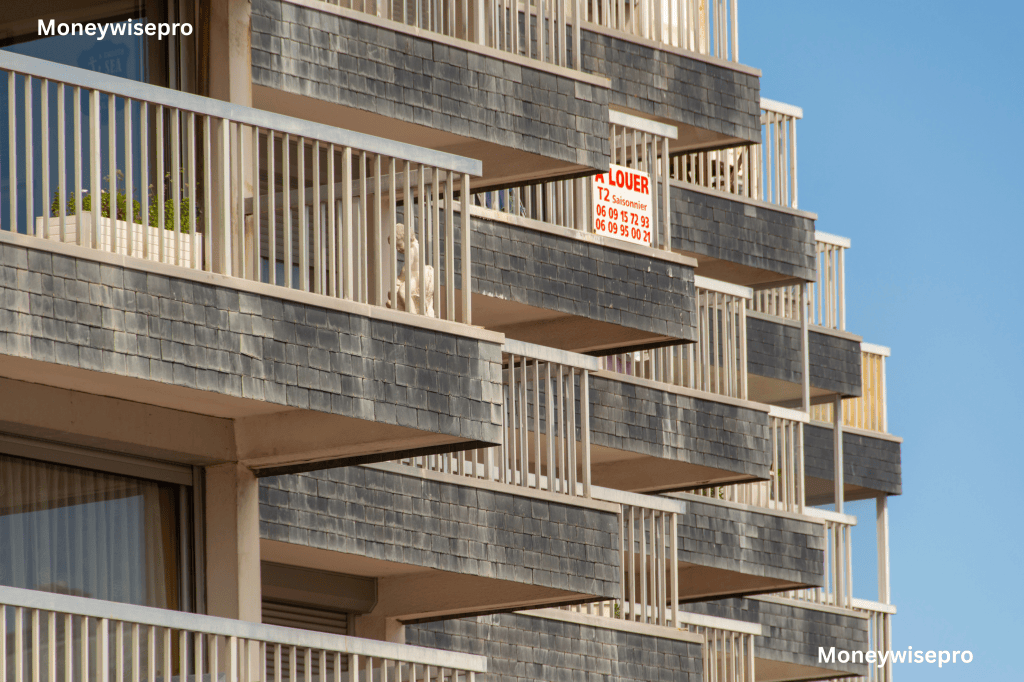
    Modern apartment building exterior showing multiple rows of balconies against a clear sky

    There is a real document that exists specifically to catch this before it becomes a surprise, and most first-time buyers never ask for it by name. It is called an HOA resale certificate, sometimes labeled a closing statement or estoppel letter, and associations are generally required to produce one within five to fifteen business days of a request. According to Associa, it discloses the current dues amount and payment frequency, any outstanding fees or violations tied to the seller, pending litigation involving the association, current reserve fund balances, and any expenditures the board already has planned. A buyer who requests and actually reads this document before closing gets a real preview of where fees are headed, instead of finding out from the next mailed statement.

    None of this is a reason to avoid HOAs altogether. A low HOA fee at signing is not automatically good news. It can just as easily mean an association that has been underfunding its reserves for years, which is exactly the setup that leads to the six-figure special assessments now hitting parts of Florida. A well-run association with a fully funded reserve, a real master insurance policy, and predictable maintenance on the roof, elevators, and shared amenities can genuinely protect a home’s value better than no HOA at all.

    Worth knowing:
    Security Deposit Alternatives Sound Free. They’re Not, and Here’s the Real Math

    Close-up of a hand holding cash bills while pressing keys on a calculator

    None of this means walking away from every home that has an HOA attached. It means treating the number on the closing disclosure as a starting point, not a ceiling. Before signing anything, request the resale certificate directly and read the reserve fund section specifically, not just the dues total. Ask the seller’s agent or the HOA management company whether any special assessment has been discussed or voted on in the last two years, even informally, and ask directly whether the building has completed its required structural or reserve study on time. A board that answers that question quickly and clearly is usually a better sign than a low current fee ever could be. And when budgeting for the new home, add a real cushion above the listed HOA fee rather than treating it as a fixed cost, the same way a smart budget already leaves room above a mortgage estimate for property tax and insurance changes.

    This helps:
    Your Emergency Fund Isn’t What It Used to Be. Here’s What Changed

    An HOA fee is just one more recurring bill sitting alongside a mortgage, property tax, and homeowners insurance, and it is easy to lose track of which one actually went up. A free payment tracker built for exactly this kind of recurring cost can make the real monthly total easier to see before it quietly climbs again.

    Have you ever checked an HOA’s resale certificate before signing, or did the real monthly cost only show up after you had already moved in?

    Disclaimer: MoneyWisePro is not a real estate professional or financial advisor. This article is for general information only and is not real estate or financial advice. Confirm current HOA fees, reserve status, and any planned assessments directly with the association or a licensed real estate professional before making decisions based on this article.


  • Does Splitting Your Rent Payment Into Two Actually Save You Money?

    Does Splitting Your Rent Payment Into Two Actually Save You Money?

    Rent is due on the first of the month. Paychecks do not care what the calendar says. That mismatch is now big business. A wave of new apps in 2026 lets you try splitting your rent payment into two smaller chunks instead of paying it all at once, and millions of renters are already signing up, according to Fortune’s reporting on the trend.

    The pitch sounds simple. Instead of handing over your full rent on day one, an app like Flex breaks it into two payments spread across the month, so your rent lines up closer to when your paycheck actually lands. Public radio’s Marketplace reported that housing costs have gotten so tight for so many households that this kind of flexibility now feels less like a luxury and more like survival.

    Here is the part that gets skipped in most of the coverage: splitting your rent payment is not free. Someone is charging for that flexibility, and the real math on what it costs over a full year is bigger than the small monthly number makes it look.

    Young woman in a gray sweater checking a rent payment app on her phone at a small kitchen table

    Take Flex, one of the biggest names in this space. Its own rent payment page lists a $5.99 monthly membership fee, a 0.5% processing fee on the total rent amount, and a split fee of up to 3% that does not shrink even if you pay everything back early. Paying with a credit card instead of a bank account adds another 2.5% on top. On a $1,800 rent payment, the split fee alone can run close to $54 in a single month, before the membership fee is even added in.

    Do that every month for a year and the fees stop looking small. A renter paying $1,800 a month who uses the full split option every single month could be paying somewhere between $130 and $200 a year just for the option of breaking one payment into two. That is real money that never touches the actual rent, the security deposit, or anything that improves the apartment.

    Rent Payment MethodExtra Monthly CostReports to Credit Bureaus?
    Paying full rent yourself, on time$0Rarely, unless your landlord reports manually
    Landlord agrees to a split due date directly$0 (if they agree)Rarely, unless your landlord reports manually
    Rent-split app, paid from a bank accountRoughly $5.99 + 0.5% + up to 3%Yes, on-time payments only
    Rent-split app, paid with a credit cardSame as above, plus 2.5%Yes, on-time payments only
    Paying 5+ days late, landlord late feeOften 5%-10% of rent, by state and leaseNo

    Check this:
    Security deposit alternatives sound free too, and they are not either

    There is one genuine upside worth being fair about. Flex states it reports on-time payments to all three major credit bureaus, and the company says it will never report anything except an on-time payment. For someone with a thin credit file, or someone rebuilding credit after a rough stretch, turning your biggest monthly bill into a payment history that actually counts toward your score is a real benefit that a landlord accepting a paper check never gives you.

    Man in a blue collared shirt reviewing a rising credit score graph on his laptop at home

    But building credit and covering a shortfall are two different problems, and splitting your rent payment only genuinely helps with the first one. CFPB research on buy now pay later use already flagged the bigger risk here: when people stack several small installment plans across different bills, the payments quietly pile up in the background until one missed paycheck knocks the whole thing over. Rent is usually the single largest bill in a household budget. Turning it into an installment plan on top of a phone bill, a BNPL plan for groceries, or a DoorDash order bought on credit is exactly the kind of stacking that research points to.

    This is why an app like this makes the most sense for a narrow group of people, not everyone. Freelancers and gig workers whose income arrives in lump sums rather than steady biweekly paychecks can genuinely benefit from choosing their own payment dates. Someone whose paycheck lands on the 3rd but whose rent is due on the 1st has a two-day gap that a split payment can bridge without ever missing a due date. For those specific situations, the fee can be a fair price for avoiding a landlord’s own late fee, which frequently runs higher than anything Flex or a similar app charges.

    Couple sitting on a couch comparing a wall calendar against a stack of household bills together

    Nobody signs up for one of these apps because they enjoy paying a fee. They sign up because the due date feels impossible and the fee feels smaller than the alternative in that exact moment.

    For everyone else, the math usually points the other way. If the real reason for wanting to split a rent payment is that the money simply is not there yet, an app fee on top of the rent does not fix that gap, it just moves it two weeks down the calendar while adding a cost to get there. Many renters are safer building even a small buffer, even $50 or $100 sitting untouched, than adding a recurring fee to their biggest bill every single month.

    Learn this:
    BNPL looked smart for a DoorDash order too, until the credit score questions started

    Before signing up for anything, it is worth pricing out splitting your rent payment the same way this article just did: add up the membership fee, the processing fee, and the split fee for a full year, then compare that number to what your own landlord actually charges for a late payment or a payment plan, if they offer one at all. Some landlords will agree to a split payment with zero fee if you simply ask, especially if you have paid on time for a while already.

    If you are already splitting rent alongside a Buy Now Pay Later plan or two, keeping every due date straight gets messy fast. A free BNPL Payment Tracker can help you line them all up before one of them sneaks past you.

    Same principle applies:
    Hidden hotel fees finally have to show up before you book, rent fees do not have that protection yet

    Many renters using these apps right now are reacting to a due date that feels impossible to hit, not doing the yearly math before they sign up. Rent has grown faster than paychecks in most US cities for years now, and any tool that promises breathing room is going to look appealing in the moment, even when the real cost only shows up later.

    So before you split your next rent payment into two, have you actually compared what the app charges against what your landlord would charge, or would even agree to for free?

    Disclaimer: MoneyWisePro is not a financial advisor. This article is for general information only and is not financial advice. Check your own lease terms and talk to your landlord or a licensed financial advisor before signing up for any rent payment app based on this article.

  • Security Deposit Alternatives Sound Free. They’re Not, and Here’s the Real Math

    Security Deposit Alternatives Sound Free. They’re Not, and Here’s the Real Math

    You are signing a lease and the total due at move-in feels impossible. Then the leasing office offers a way out. Skip the full security deposit. Pay a small monthly fee instead. It sounds like the apartment just solved your cash problem for free. It did not. What you just agreed to is called a security deposit alternative, and it works nothing like the deposit it replaced.

    A real security deposit is refundable. You get it back, in full or in part, when you move out and the unit is undamaged beyond normal wear. A security deposit alternative is usually a monthly fee or a one-time payment to a third-party insurance or surety company, and in almost every version of this product, none of that money ever comes back to you, no matter how clean you leave the apartment.

    A renter carefully reads through a lease agreement while checking numbers on a calculator

    Here is what these products actually cost, based on real published pricing. Rhino charges roughly 13 dollars a month on a 3,000 dollar rent, billed for as long as you live there. LeaseLock charges a flat 19 dollars a month regardless of rent amount, and some property managers pass this fee directly to the tenant. Jetty and SureDeposit work differently, charging a one-time payment equal to about 17.5 percent of what your full deposit would have been, so a 1,200 dollar deposit becomes roughly a 210 dollar upfront payment instead. Every one of these is a fee for a service, not a deposit held on your behalf, and that distinction is exactly what a security deposit alternative tries to blur in its own marketing.

    Run the math on a normal 12-month lease and the gap becomes obvious. A LeaseLock fee at 19 dollars a month adds up to 228 dollars over a year, and every dollar of it is gone the moment you pay it. A traditional 1,500 dollar refundable deposit costs more upfront, but a renter who leaves the unit in decent shape typically gets most or all of it back. The security deposit alternative can end up costing you money for a service you may never even need, while the traditional deposit is money you were always going to get back anyway if you took care of the place.

    Cardboard moving boxes sit stacked in an empty sunlit apartment during a move out

    States are starting to notice the confusion this causes. Florida passed a law in 2023, tracked as CS/HB 133, that lets landlords offer a nonrefundable fee in place of a deposit, but only if the lease clearly states in writing that the fee is not a security deposit and does not remove the tenant’s responsibility for damage beyond normal wear. Virginia went further in 2025 with House Bill 2430, which requires landlords to itemize the security deposit, the rent, and any additional one-time charges, including a deposit-alternative fee, on the first page of the lease itself, for any lease signed, extended, or renewed after July 1, 2025. Neither law bans these products. Both exist because lawmakers recognized that renters were signing up for something they did not fully understand.

    OptionType of ChargeTypical CostRefundable?
    RhinoOngoing monthly feeAbout $13/month on a $3,000 rentNo
    LeaseLockFlat monthly fee$19/month, any rent amountNo
    Jetty / SureDepositOne-time surety bondAbout 17.5% of your full depositNo
    Traditional depositRefundable depositOften one month’s rent, paid upfrontYes, minus damage beyond normal wear

    Housing researchers have raised the same concern for years. A tenant-rights analysis from Shelterforce described how these products get marketed under names like renters choice in a way that makes them sound like a benefit rather than a recurring fee with no refund at the end. That framing matters because a security deposit alternative is genuinely useful for someone who cannot afford thousands of dollars upfront, and genuinely expensive for someone who could have paid the real deposit and gotten it back later.

    Many Americans sign these agreements during a stressful, fast-moving move-in process, without ever comparing the total fee to what a refundable deposit would have actually cost them over the same lease term. That single comparison, done before signing anything, is the only real way to know whether a security deposit alternative is saving you money or quietly taking more of it.

    A leasing agent hands over a set of apartment keys to a smiling new tenant

    Worth knowing:
    Your Car Insurance Renewal Just Went Up. Here’s Why, Even With a Clean Record

    Before you sign anything, ask the leasing office two direct questions. First, is this fee refundable in any amount when I move out. Second, does choosing this option remove or reduce my responsibility for damage beyond normal wear. If the answer to both is no, you are looking at an insurance product being sold to you at move-in, not a deposit being held for you.

    Think about:
    Canceling Your Gym Membership Shouldn’t Be This Hard, and a Court Just Made It Worse

    None of this makes security deposit alternatives a scam. For a renter with no savings cushion, paying 19 dollars a month instead of 1,500 dollars upfront can be the difference between moving into a safe apartment and not moving at all. The real problem is that most renters are never shown the side-by-side math before they sign, and the lease paperwork is written to make a nonrefundable fee sound as harmless as a normal deposit. A five-minute calculation before signing is the only real safeguard here, and it costs nothing to do.

    Learn this:
    Why Do So Many Stores Charge You to Return Something Now?

    A security deposit alternative can be the right call for the right renter. It stops being the right call the moment nobody does the math on what it actually costs over the life of the lease, compared to what a real deposit would have cost and eventually given back.

    Have you ever been offered a no deposit option on an apartment, and did you actually compare what it would cost you over time?

    Disclaimer: MoneyWisePro is not a lawyer. This article is for general information only and is not legal advice. Contact your own state’s housing agency, a local tenant rights organization, or a landlord-tenant attorney for guidance on your specific lease and state.

  • How to Use Record-High Apartment Vacancies to Negotiate Your Rent Down in 2026

    How to Use Record-High Apartment Vacancies to Negotiate Your Rent Down in 2026

    Why does everyone assume rent only goes up? That assumption made sense for years. It doesn’t anymore, at least not everywhere, and most renters have no idea the numbers just shifted in their favor.

    Apartment vacancies hit a record 8.6% in early 2026, up from 7.2% just months earlier. That means landlords have more empty units sitting unrented than they’ve had in years, and empty units cost landlords money every single day they stay empty.

    I remember signing a lease years ago without asking a single question about the price, because it never occurred to me that the number on the page wasn’t final. Looking back, that assumption cost me more than it should have.

    Person reviewing a lease agreement while considering negotiating the rent price

    Here’s why this matters for you directly. When vacancy rates climb this high, according to CoStar Group’s 2026 Multifamily National Report, property managers often extend more concessions just to fill units. That includes waived fees, a free month of rent, or flexibility on the monthly price itself, especially in buildings that have sat vacant for weeks.

    This isn’t happening everywhere the same way. National rent growth slowed to just 0.4% year over year, way down from 1.5% the year before, but the picture changes city by city. Places like Chicago, Cincinnati, and Philadelphia are still seeing real increases, while other markets are flat or even falling. Checking your specific city’s vacancy trend, not just the national headline, tells you how much leverage you actually have.

    Apartment building with a for rent sign, showing an empty unit available

    Worth knowing: rent isn’t the only monthly cost quietly climbing while your paycheck stays flat.
    Your Paycheck Isn’t Keeping Up With Inflation. Here’s Why.

    Not everyone agrees renters have real power right now. Some housing economists point out that the number of renters facing serious cost burdens just hit a record high too, according to Harvard’s Joint Center for Housing Studies, which means plenty of people don’t have the financial room to walk away from a bad offer even if a landlord won’t budge. Having leverage on paper and being able to use it are two different things when your budget is already tight.

    So how do you actually negotiate? Start by researching what similar units in your building or neighborhood are renting for right now, not what they rented for a year ago. Bring that number with you. Landlords expect prepared tenants to know the market, and vague requests rarely go anywhere.

    Person having a conversation with a landlord or property manager about lease terms

    Timing matters just as much as the number. Fall and winter tend to be slower rental seasons, which means less competition and more room for landlords to say yes. If your lease renewal falls during a slow season, that’s the moment to ask, not after signing for another year at the old terms.

    Think about: any extra room in your monthly budget matters more once you actually have it.
    Your Emergency Fund Isn’t What It Used to Be. Here’s What Changed.

    Nationally, nearly 40% of rental listings now include some kind of concession, and Zillow estimates renters save $1,930 on average when they land a free month of rent.

    If a lower monthly rate isn’t on the table, ask about concessions instead. A free month, waived application or amenity fees, or a locked-in rate with no increase at renewal can all be worth more over a year than a small monthly discount. Landlords sometimes have more flexibility on these than on the sticker price itself.

    Nobody enjoys the awkwardness of asking a landlord for a better deal. That discomfort is real, and it’s usually smaller than the cost of staying quiet for another year.

    Metric20252026
    National vacancy rate7.2%8.6%
    National rent growth (YoY)1.5%0.4%
    U.S. average rent~$1,600$1,663

    The market shifted. Most renters haven’t caught up to that fact yet, and landlords aren’t going to be the ones to point it out.

    Have you ever tried negotiating your rent, and did it actually work?

    Disclaimer: This article is for general informational purposes only and does not constitute financial or legal advice. Rental markets and lease terms vary significantly by city and property. Consult a licensed real estate professional or tenant rights organization for guidance specific to your situation.