Tag: health

  • 92% of Americans Are Skipping Doctor Visits to Save Money — Here’s What That’s Actually Costing Them

    92% of Americans Are Skipping Doctor Visits to Save Money — Here’s What That’s Actually Costing Them

    A new survey found something that should worry more people than it does. Why are so many Americans delaying doctor visits to save money right now? According to a February 2026 analysis, 92% of US adults have delayed or avoided medical care because of cost.

    That’s not a typo. Nine out of ten adults, at some point, decided a doctor’s visit wasn’t worth what it might cost them.

    I’ve put off going to the doctor myself when something didn’t feel serious enough to justify the bill. That decision always feels small in the moment. It rarely feels small later.

    Person looking hesitant while holding a phone, considering whether to call a doctor

    According to research from healthcare marketplace Zocdoc, a doctor’s office visit for someone without insurance now averages $171 across major US cities. For a family living paycheck to paycheck, that number alone is enough to make people wait and see instead of booking an appointment.

    Young adults are getting hit hardest. Adults between 18 and 28 are the most likely group to delay or avoid care because of cost, and that pattern is showing up across nearly every income bracket, not just the uninsured.

    Young adult looking worried while reviewing a medical bill at home

    Read this: if healthcare costs are eating into your budget, it’s worth understanding what’s actually driving the numbers up in the first place.
    Your Health Insurance Bill Just Jumped 58%. Here’s What Actually Happened.

    The consequences aren’t staying small either. Direct polling from KFF found nearly one in five adults said their health actually got worse because they skipped a visit. For uninsured adults under 65, that share jumps to 42%, more than double the rate among those with coverage. Waiting on a checkup doesn’t just delay a bill, it sometimes turns a minor problem into a bigger, more expensive one later.

    Prescription costs are part of the same pattern. A separate KFF poll on prescription costs found 43% of insured adults have skipped or cut back on a prescribed medication due to cost, and that share climbs to 58% among adults without insurance. That’s not always a safe substitute, and it’s rarely something a pharmacist gets asked about before the switch happens.

    Person comparing over-the-counter medication options at a pharmacy shelf

    Not everyone reads this trend the same way. Some health economists argue that avoiding unnecessary care isn’t automatically bad, since a portion of routine visits in the US produce little medical value relative to their cost. The concern isn’t people skipping every appointment. It’s that cost, not medical judgment, is now the deciding factor for millions of people, even when something might actually be wrong.

    Think about: a bill you didn’t see coming can undo months of careful budgeting in a single visit.
    Your Emergency Fund Isn’t What It Used to Be. Here’s What Changed.

    There are a few real options if cost is the thing standing between you and a visit. Community health centers often charge on a sliding scale based on income, sometimes far below the $171 average. Urgent care clinics post their prices upfront in a lot of states now, which makes comparing options possible before you walk in. And asking directly about a cash-pay discount, before the visit, sometimes gets you a lower rate than what shows up on the bill after insurance processes it.
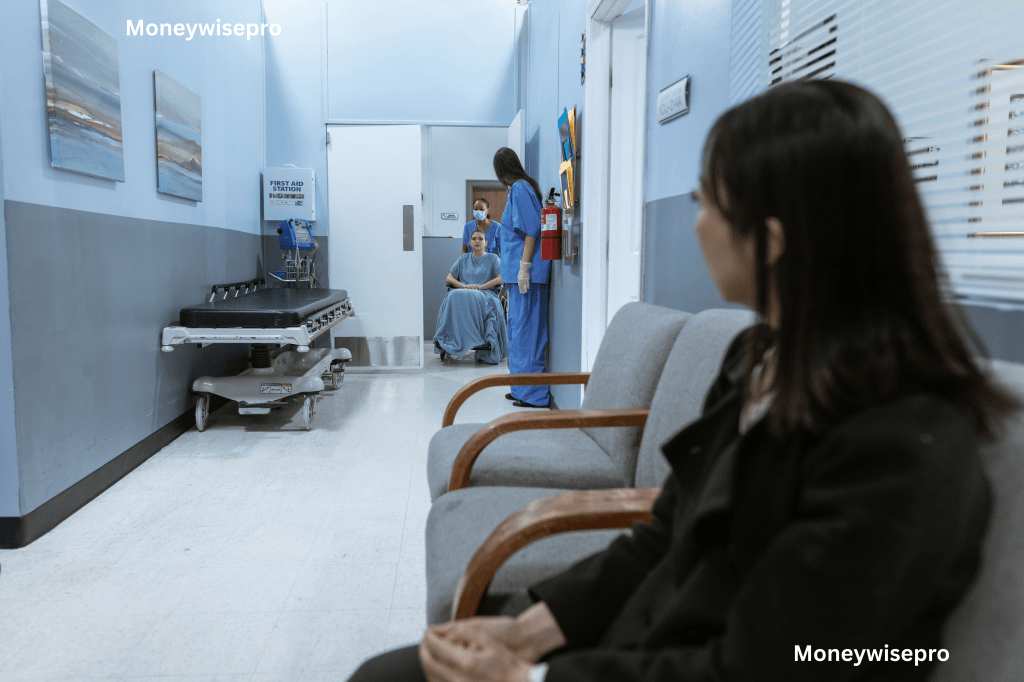
    Waiting room inside a community health clinic offering income-based pricing

    Nobody decides to skip a doctor’s visit because they don’t care about their health. Most people are doing basic math with a number that doesn’t leave much room, and betting that today’s problem can wait until there’s more room in the budget.

    GroupDelayed or Avoided Care Due to Cost
    All US adults92%
    Adults 18–2894.2%
    Health got worse (uninsured, under 65)42%

    Skipping one visit rarely feels like a financial decision at the time. It usually just feels like waiting. The cost of that wait doesn’t show up until later, and by then it’s often bigger than the bill would’ve been.

    Have you ever put off seeing a doctor because of the cost, and did it end up costing you more later?

    Disclaimer: This article is for general informational purposes only and does not constitute medical or financial advice. Individual healthcare situations vary. Consult a licensed healthcare provider or financial advisor for guidance specific to your circumstances.


  • Almost a Third of Americans Feel Financially Broke — Even When They’re Not. I Know the Feeling.

    Almost a Third of Americans Feel Financially Broke — Even When They’re Not. I Know the Feeling.

    person looking at smartphone with worried expression

    I remember the moment clearly.

    I had just checked my bank balance. There was money there. More than last month, actually. But I didn’t feel relieved. I felt the same knot in my stomach I always felt.

    That’s the trap with money dysmorphia — no amount of money fixes it because the problem isn’t the money. It’s the voice in your head that keeps saying it isn’t enough. You can’t budget your way out of a lie you believe about yourself.

    Why?

    Because my brain kept telling me: “It’s not enough. It’ll never be enough.”

    Turns out, I wasn’t alone.

    A recent study found that 29% of Americans suffer from “money dysmorphia” — a distorted view of their own finances that makes them feel poor even when they’re doing okay financially (Credit Karma’s Money Dysmorphia Report, 2026, based on a national survey of 1,039 U.S. adults conducted January 2026).

    For Gen Z, it’s even higher — 43%.

    Money Dysmorphia StatisticPercentageDemographicSourceYearSurvey Details
    Money Dysmorphia Rate29%General US AdultsCredit Karma20261,039 adults (Jan 2026)
    Money Dysmorphia Rate43%Gen ZCredit Karma2026Subset of 1,039
    Says It Hurts Finances95%People with money dysmorphiaCredit Karma2026Of the 29-43% affected
    stressed person looking at laptop

    What is money dysmorphia exactly?

    It’s when your financial reality doesn’t match your financial feelings.

    You might have a steady job. You might be saving something each month. But you still feel like you’re falling behind. You compare yourself to others online. You see people buying houses, going on vacations, and you wonder: “What’s wrong with me?”

    Connected: Why I Stopped Thinking About Money All the Time

    The study also found that 95% of people with money dysmorphia say it hurts their actual financial situation. They make worse decisions because they feel desperate, even when they’re not.

    I’ve been there.

    What I learned about my own money dysmorphia:

    When I felt “poor,” I made poor choices. I’d avoid checking my accounts. I’d spend small amounts to feel better. I’d say yes to things I couldn’t afford because I wanted to feel “normal.”

    The feeling was the problem. Not the number.

    Once I realized that, everything changed. I stopped trying to earn my way out of anxiety and started trying to think my way out of it. The numbers didn’t need to change — my brain did.

    calm person writing in a notebook

    Here’s what started helping me:

    1. Stop comparing. I unfollowed people who made me feel behind. Their highlight reel isn’t my reality.
    2. Check the actual numbers. I started looking at my accounts every morning — not to panic, but to know. The truth is usually less scary than what your brain imagines.
    3. Talk about it. The study found that people who openly discuss money with friends and family feel less anxious. I started doing this. It helped more than I expected.
    4. Separate feelings from facts. Just because I feel behind doesn’t mean I am behind. Feelings are real, but they’re not always true.

    This helps too: 60% of Americans Bought Secondhand Last Year

    The honest truth:

    Money dysmorphia isn’t about your bank balance. It’s about your brain lying to you.

    The fix isn’t getting more money. The fix is changing how you see the money you already have.

    Question for you: When was the last time you actually checked your numbers and compared them to how you feel about your money? Try it today. You might surprise yourself.

    Face the numbers: Why I Used to Avoid Opening My Own Bank App

    Disclaimer: This article is for educational purposes only and should not be considered as financial or mental health advice. Money dysmorphia and financial anxiety vary by individual and require personalized assessment. Consult with a qualified mental health professional or financial advisor if financial distress is significantly impacting your wellbeing.

  • 4.7 Million People Already Lost Food Assistance in 2026 — More Than the Government Predicted

    4.7 Million People Already Lost Food Assistance in 2026 — More Than the Government Predicted

    Do you know someone between 55 and 64 who gets help buying groceries through SNAP? They may have just lost that help, and might not even know why yet.

    Starting last year, a new law changed who has to work to keep their food assistance. Before, you were exempt from work requirements once you turned 55. Now that age was pushed all the way up to 64.

    “I talked to a woman who turned 55 and thought she was finally getting a break. Two months later her benefits disappeared without warning. She had no idea the age limit had changed — nobody told her.

    Person checking prices while grocery shopping on a budget

    If you’re in that 55-64 group and don’t have a disability or another exemption, you now have to work, train, or volunteer at least 80 hours a month. Miss that, and your benefits get cut off after just 3 months.

    It’s not only older adults affected. The law also removed automatic protection for veterans, people experiencing homelessness, and young adults who grew up in foster care. Parents used to be exempt if they had any child under 18 at home. Now that only applies if your youngest child is under 14.

    Does that mean a parent with a 15-year-old at home now has to meet a work quota just to keep buying groceries for their family? Yes, it does.

    Nearly empty pantry shelves in a home kitchen

    Here’s the part that really matters: the government’s own budget office predicted about 3 million fewer people would be on SNAP this year because of this law. The real number, as of March 2026, is already 4.7 million people gone from the program. That’s worse than what was officially expected, and it happened faster too.

    Over 1 million of the people affected are specifically in that older, 55-64 age group who used to be safe from these rules.

    “That’s over a million people who thought they had stability and suddenly don’t. Most of them aren’t lazy — they’re people who worked their whole lives and are now exhausted at an age when finding work gets harder, not easier.

    Eligibility ChangeBefore LawAfter Law (2026)Who’s AffectedExemptions Lost
    Age Exemption55+ exempt64+ exemptAges 55-63Automatic
    Work Requirement80 hrs/month80 hrs/monthBoth groupsNone added
    Parent ExemptionAny child under 18Youngest under 14Parents 15+ year olds1 year groups
    VeteransAutomatic exemptNo automaticVeteransSpecial status
    HomelessAutomatic exemptNo automaticHomelessSpecial status
    Foster Care AlumniAutomatic exemptNo automaticFoster alumniSpecial status
    Total Lost4.7 million (March 2026)vs 3M predicted

    If this sounds like it could hit you, or someone in your family, here’s what actually helps. If you get a notice saying your benefits are ending, don’t ignore it, you can request what’s called a Fair Hearing to challenge the decision before benefits stop. If you have any medical condition that limits your ability to work, submit documentation for it right away, that can qualify you for an exemption. If you are working but just haven’t reported it, send proof like pay stubs to your local SNAP office as soon as possible.

    Important: 4.7 Million People Already Lost Food Assistance in 2026

    Older adult reviewing paperwork and documents at a table

    Most states also have a free legal aid helpline for exactly this kind of situation, worth calling before just accepting a cutoff notice.

    Has anyone in your life mentioned losing food assistance this year? Did they know it was because of an age rule change, or did it come as a surprise?

    Related: I Used to Struggle Paying My Bills

    Disclaimer: This article is for educational purposes only and should not be considered as legal or government benefits advice. SNAP eligibility rules, work requirements, and exemptions vary by state. Consult with your local SNAP office or a legal aid attorney before your benefits are affected.

  • Your Health Insurance Bill Just Jumped 58% — Here’s What Actually Happened

    Your Health Insurance Bill Just Jumped 58% — Here’s What Actually Happened

    Did your ACA marketplace health insurance bill go up this year? You’re not imagining it.

    The average person on marketplace insurance is now paying $178 a month, up from $113 last year. That’s a 58% jump, and it happened because of one thing: extra subsidies that started during COVID finally ran out at the end of 2025.

    Person reviewing a stack of medical bills at a kitchen table

    Those extra subsidies used to cap what you paid for insurance at 8.5% of your income, no matter how much you earned. Now that cap is gone for higher earners, and the discount is smaller for everyone else too.

    Some people got hit a lot harder than others. If you’re a 60-year-old couple making $85,000 a year, your yearly cost could be up over $22,000. If you’re a single person making $28,000, you’re looking at roughly $1,238 more a year — and your share of income going to insurance jumped from about 1% to almost 6%.

    I didn’t realize those COVID subsidies were temporary until I got my renewal notice. It felt like the government gave with one hand and took back with the other. Suddenly my insurance doubled.

    Income LevelAge2025 Monthly Cost2026 Monthly CostAnnual IncreaseImpact
    $28,000/yearSingle~$104$242+$1,6566% of income
    $85,000/year60-year-old couple~$1,833$1,833++VariesMay exceed $22K
    $50,000/year35-year-old~$144$250+$1,2723% of income
    Bronze PlanAll ages$100$120+$240High deductible

    Money isn’t the only thing that changed. Deductibles — the amount you pay out of pocket before insurance kicks in — hit a record $3,786 this year, up 37%. A lot of people responded by switching to cheaper “bronze” plans with lower monthly costs but much higher deductibles. That’s a real trade-off: less out of your paycheck now, more risk if you actually get sick.

    Deep dive: Medical Debt Can Still Wreck Your Credit Score

    Close-up of a health insurance enrollment form being filled out

    And here’s the part that worries me most: about 4.8 million people just stopped having marketplace coverage altogether. Some couldn’t afford the new price. Some just gave up and decided to go without. Nearly half of everyone who left was between 18 and 34 — young, usually healthier, people who often think they can go without insurance until something goes wrong.

    If you’re one of the people paying more right now, you’re not alone, and you’re not doing anything wrong. This wasn’t a personal budgeting mistake. It was a policy decision made in Washington, and it landed on real people’s bank accounts.

    This isn’t about cutting back on lattes or skipping dinner out. This is structural. People making $50K a year watching 3% of their entire income go to insurance — that’s not a personal finance problem, that’s a system problem.

    Related read: Your Paycheck Isn’t Keeping Up With Inflation (And That’s Not Your Fault)

    Family sitting together reviewing a household budget

    So what can you actually do about it? A few real options: check if you qualify for a cheaper bronze or catastrophic plan if you’re generally healthy and just need protection from a worst-case bill. Check if your state runs its own marketplace with extra state-level subsidies (some states added their own money to soften this). And if your income dropped or changed this year, report it — your subsidy is based on estimated income, and a correction could lower your bill.

    Did your premium go up this year? Did you switch plans, or did you drop coverage? I’d really like to know how this hit your own numbers.

    Disclaimer: This article is for educational purposes only and should not be considered as medical or health insurance advice. Insurance plans, subsidies, and coverage vary by state and individual circumstances. Consult with a qualified insurance agent or healthcare professional before making insurance decisions.