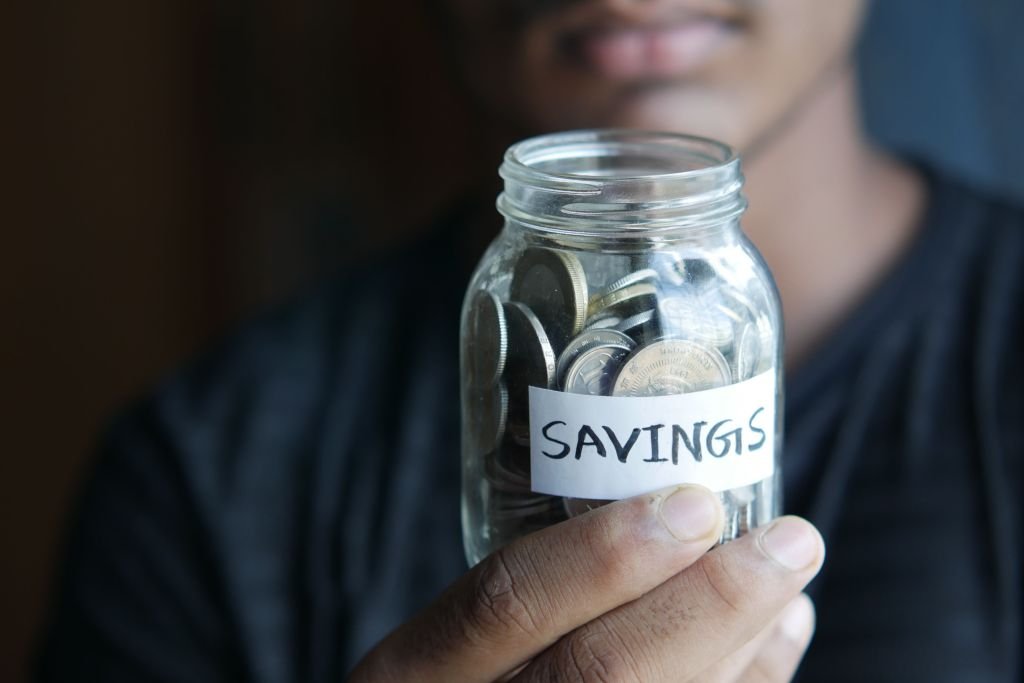
Tag: Financial Habits

  • Why Most Americans Fail at Saving (And the One Habit That Changes Everything)

    Why Most Americans Fail at Saving (And the One Habit That Changes Everything)

    I used to be one of those people. I’d open my savings account, feel motivated, and tell myself this month would be different. I’d save $200. Maybe even $300. And for a week or two, I’d stick to it.

    The truth is I never actually failed because I was lazy. I failed because I kept trying to save using only willpower. And willpower is like a muscle that gets tired. Mine gave up every single month.

    Then I’d see something I wanted. A subscription service. A meal out. New clothes. And the savings account would sit untouched for the next three months.

    The cycle repeated for years. I wanted to save. I knew I should save. But I never actually saved consistently.

    According to recent research, I’m not alone. 38% of Americans say their biggest financial regret is not saving money. And 54% of Americans now live paycheck to paycheck, up from 42% just five years ago.

    Saving StatisticPercentageTimeframeContext
    Biggest Regret: Not Saving38%CurrentFinancial regret
    Living Paycheck to Paycheck54%2026Current rate
    Paycheck to Paycheck (5 yrs ago)42%2021Past rate
    Growth in Rate+12%5 yearsDeteriorating trend
    Confident in 2026 Goals45%Planning 2026If using right strategy

    Automatic Savings Example:

    Starting AmountTimeframeTotal Saved
    $25-50/month3 months$75-150
    $25-50/month12 months$300-600

    The statistics are clear: most people fail at saving. Not because they’re lazy or careless. They fail because they’re using the wrong method.

    Check this too: 37% of Americans Still Budget With Pen and Paper

    Why Traditional Saving Doesn’t Work

    When I decided to “get serious” about saving, I tried the textbook approach: Open a savings account. Set a goal. Manually transfer money each month.

    Sounds good in theory. In practice? It failed within weeks.

    Here’s why: every month, I had to make a conscious decision to transfer money. And every month, there was a good reason not to. The car needed repairs. The kids needed something. An unexpected expense came up.

    My willpower was the only thing protecting my savings. And willpower is exhaustible.

    Person sitting at desk looking worried, struggling with financial decisions

    The problem isn’t that people lack discipline. The problem is that manual saving requires willpower every single month. And most people’s willpower breaks before their savings goals are reached.

    The One Habit That Actually Works

    Everything changed for me when I discovered something obvious: stop relying on willpower.

    Once I automated it, saving became invisible. I didn’t have to be motivated. I didn’t have to make a choice. The money just moved. That’s when I finally stopped failing.

    Instead, I set up automatic transfers. Money moved from my checking account to savings the day after I got paid. I didn’t have to think about it. I didn’t have to make a choice. It just happened.

    The difference was dramatic. Suddenly, saving wasn’t about motivation anymore. It was just what happened with my money.

    Savings automation is poised to accelerate as more Americans use tools that automatically move money into savings and optimize cash flow without manual intervention. The data shows this works. When saving is automatic, people actually save.

    This is the one habit that changes everything: Remove yourself from the equation.

    Read this: Why I Used to Avoid Opening My Own Bank App

    Person successfully tracking finances and budget on computer

    Why 2026 Is Different

    In 2025, nearly half (45%) of Americans say they feel confident in their ability to reach their 2026 financial goals. That confidence is warranted — if they use the right strategy.

    The tools are better now. You can set up automatic transfers in minutes. You can get high-yield savings accounts that actually pay you decent interest. You can even automate investments.

    The technology makes it easier than ever to save without relying on willpower.

    The Counter-Argument: What If I Need The Money?

    The most common objection I hear: “But what if I need to access that money?”

    Here’s the honest answer: you’ll still access it if you absolutely need to. Emergency funds exist for a reason. But by making it slightly less convenient, you prevent the impulse withdrawals.

    When money requires one extra click to access, you’re less likely to tap it for a non-emergency. When it’s in a separate account entirely, even less likely.

    The friction is intentional. It protects your savings from yourself.

    Person confidently making a positive financial decision

    How to Actually Start

    You don’t need a complicated plan. You don’t need to save $500 a month. You just need to automate something.

    Start small. $50 a month. Even $25. Set it to move automatically the day after payday. Don’t think about it. Don’t adjust it. Just let it work.

    After three months, you’ll have $75-$150 without ever making a decision. After a year, that’s $300-$600 just from removing yourself from the process.

    Once you see this work, you’ll increase it. Because unlike manual saving, where one missed month kills your motivation, automatic saving builds momentum. You see the account grow. You feel it working. You get encouraged to do more.

    The Hard Truth About Saving

    The reason most people fail at saving isn’t a character flaw. It’s poor strategy.

    They’re trying to save using willpower. Willpower is finite. It fails.

    The people who actually save? They don’t rely on willpower. They automate. They set it and forget it. They remove the decision-making from the equation.

    In 2026, with so many Americans making financial resolutions, this is the one change that actually sticks.

    Stop trying harder. Start saving automatically.

    Your future self will thank you.

    So what’s stopping you from setting up an automatic transfer today?

    Worth knowing: 53% of Americans Can’t Cover a $1,000 Emergency

    Disclaimer: This article is for educational purposes only and should not be considered as financial or investment advice. Savings strategies, automation tools, and account types vary by bank and individual circumstances. Consult with a qualified financial advisor before opening new accounts or making major financial decisions.


  • I Used to Live Paycheck to Paycheck. Here Is What Finally Broke the Cycle

    I Used to Live Paycheck to Paycheck. Here Is What Finally Broke the Cycle

    I remember sitting at my kitchen table staring at my bank account.

    Zero dollars. And rent was due in three days.

    I felt sick. I felt ashamed. I felt like no matter how hard I worked — there was never enough money left at the end of the month.

    Does that sound familiar to you?

    Right now, more than half of Americans are living paycheck to paycheck. Working hard every single day. And still running out of money before the month runs out.

    I was one of them. For years.

    But something finally changed. And today I want to share exactly what broke the cycle for me.


    First — Why Does This Keep Happening?

    It’s not because you’re lazy. It’s not because you don’t work hard enough.

    The real reason is simple: Your money has no plan.

    Every month, money comes in. And money goes out. But nobody is telling that money where to go. So it just… disappears.

    On coffee. On subscriptions you forgot about. On small purchases that feel like nothing but add up to everything.

    Sound familiar?


    The Moment Everything Changed For Me

    One day I sat down and wrote every single thing I spent money on.

    Everything.

    Coffee. Lunch. That app I never use. The subscription I forgot I had. Everything.

    I was shocked.

    I was spending over $300 a month on things I did not even remember buying.

    That was the moment I realized — I did not have an income problem. I had a spending awareness problem.


    Here Is What I Did — Step By Step:

    Step 1 — I Wrote Down Every Dollar

    For one full week I wrote down every single thing I spent money on. Every coffee. Every snack. Every online purchase.

    No judgment. Just honesty.

    Try it. You will be shocked at what you find.

    Learn more: I Was Shocked When I Saw My Grocery Bill

    Step 2 — I Found My “Money Leaks”

    After that week I looked at my list and circled everything that was not necessary.

    These are your money leaks. Small holes that drain your account every single month without you noticing.

    For me it was:

    • 3 streaming services I barely used
    • A gym membership I had not used in 4 months
    • Daily coffee runs that cost me $90 a month

    I cancelled all of it. Same day. That one week of awareness saved me $300+ per month.

    Step 3 — I Paid Myself First

    This one changed everything.

    The moment my paycheck arrived — before I paid anything else — I moved $50 into a separate savings account.

    Just $50. That is it.

    Not $500. Not $200. Just $50.

    I pretended that money did not exist.

    After 3 months I had $150 saved. It was the first time in years I had money that was not already spoken for. That feeling changed everything for me psychologically.


    Step 4 — I Started Using a Budget Framework

    When I looked at how I spent money, I noticed something.

    Many people use a budgeting framework where they split income into categories. Some use 50/30/20 (50% needs, 30% wants, 20% savings). Others use different splits like 70/20/10 or 60/25/15.

    The point isn’t which ratio is “right” — it’s finding one that works for YOUR life.

    I experimented with a few different splits until I found one where I could actually stick to it. That consistency was more important than the perfect formula.

    Comparison: Common Budget Splits

    FrameworkNeeds/Wants/SavingsBest For
    50/30/2050/30/20Moderate income
    60/25/1560/25/15Lower income
    70/20/1070/20/10Tight budget
    40/40/2040/40/20High earners

    The key: Pick one, test it for a month, adjust if needed. Consistency beats perfection.

    Step 5 — I Stopped Using Credit For Small Things

    Every time I used my credit card for something small — coffee, groceries, gas — I told myself it was fine.

    It was not fine.

    Those small charges added up to hundreds of dollars every month. Plus interest.

    I switched to cash for small daily purchases. When the cash was gone — it was gone. No more spending.

    The physical act of handing over cash made me think twice. Cards make spending too invisible.

    See also: Average American Owes $6,715 in Credit Card Debt


    What Happened After 3 Months

    I want to be honest with you.

    It was not easy at first.

    The first month I still overspent in some areas. But I was aware of it. And awareness is everything.

    By month two I was no longer stressed on the last week of the month.

    By month three I had savings in my account for the first time in years.

    Nothing dramatic. No lottery win. No miracle.

    Just small changes done consistently every single month.


    You Can Do This Too

    If you are living paycheck to paycheck right now — I want you to know something.

    It is not your fault that nobody taught you this.

    But it IS your responsibility to change it.

    Start with just one step today. Write down everything you spend for one week. Just that. Nothing else.

    That one step will open your eyes in a way nothing else can.

    The people who break free from paycheck-to-paycheck living aren’t the ones making more money. They’re the ones who became aware of where their money actually goes.

    So what’s stopping you from tracking your spending for just one week?

    Disclaimer: This article is for educational purposes only and should not be considered as financial advice. Everyone’s financial situation is unique. Consult with a qualified financial advisor before making investment decisions.

  • “5 Simple Ways to Save $100 This Month”

    “5 Simple Ways to Save $100 This Month”

    Do you ever look at your bank account and wonder — where did all my money go?

    I know that feeling. You work hard. You try to be careful. But somehow, money just disappears.

    The good news? You don’t need to make more money to save more money. You just need to stop small leaks.

    From tracking my own spending, I’ve found these 5 simple ways to save $100 this month — starting today.


    1. Delete One Subscription You Forgot About

    Go check your bank statement right now.

    I’ll wait.

    Do you see a charge for Netflix, Spotify, a gym, or some app you never use? Most people have at least one. I had three subscriptions I’d completely forgotten about.

    Cancel it today. That’s $10 to $15 saved — without doing anything hard. One subscription down, and you’re already $120+ ahead for the year.


    2. Cook at Home Just 3 More Times This Week

    I’m not saying never eat out. That’s too hard.

    But if you cook at home 3 extra times this week instead of ordering food — you save around $30 to $50 easily.

    A simple meal at home costs $3 to $5. Ordering food costs $15 to $20. When I started cooking just 3 times instead of 5 per week, I saved $600 in three months.

    The math is easy. The results are real.

    Learn more: 82% of Americans Changed How They Shop for Groceries.

    3. Make a Shopping List Before You Go to the Store

    This one sounds boring. But it works.

    When you walk into a store without a list, you buy things you don’t need. Every single time. I tested this — went without a list one week, spent $120. With a list the next week, spent $85.

    Write down what you need before you go. Stick to the list. You’ll save $20 to $30 every trip — without even trying.

    The difference between going to the store with a list and without was crazy. One week I spent $120, the next week with a list I spent $85. It actually works.


    Comparison Table: Grocery Shopping Impact

    MethodWeekly CostMonthly SavingsDifficulty
    No list$120Hard to control
    With list$85$140Easy
    List + coupons$70$200Medium

    4. Wait 24 Hours Before Buying Something You “Want”

    See something you want to buy? Wait one day.

    If you still want it tomorrow — maybe buy it. But most of the time? You forget about it.

    I tracked this for a month. Out of 15 things I “wanted,” I actually bought only 3 after waiting 24 hours. The other 12? Completely forgotten.

    This one habit can save you $20 to $50 every month. Try it this week.


    5. Turn Off Lights and Unplug Devices You’re Not Using

    This feels like small stuff. But it adds up.

    Leaving lights on, TVs plugged in, chargers in the wall — all of this costs you money every month. My electric bill dropped $15 per month just by unplugging devices when not in use.

    Turn things off when you leave a room. Unplug chargers when not in use. Save $10 to $20 on your electricity bill.

    See also: Your Paycheck Isn’t Keeping Up With Inflation.


    Quick Math:

    • Subscription: $15
    • Cook at home: $40
    • Shopping list: $25
    • Impulse buying: $15
    • Electricity: $15

    Total: $110/month = $1,320/year


    You Can Do This

    $100 sounds like a lot. But look at these 5 steps — each one is small.

    You don’t have to do all 5 today. Pick just one. Start there.

    Small steps every day lead to big changes every month. The people who save money aren’t the ones who make more. They’re the ones who stop wasting what they already have.

    So here’s my question for you: which one of these 5 methods are you going to try this week?

    Disclaimer: This article is for educational purposes only and should not be considered as financial advice. Everyone’s financial situation is unique. Consult with a qualified financial advisor before making investment decisions.