Tag: mental-health

  • You Don’t Have to Cut Everything to Spend Less. You Just Have to Pause First.

    You Don’t Have to Cut Everything to Spend Less. You Just Have to Pause First.

    A new regional survey from WSFS Bank found something simple: 39% of people are spending less than they were a year ago. Not because they’re panicking. Because they’re pausing.

    That one word — pause — is the whole story.

    I used to buy things the second I wanted them. See it, want it, click it. No gap between the feeling and the action.

    The worst part was that I convinced myself each purchase was a deliberate choice. It wasn’t. It was just impulse with a justification attached. The pause showed me the difference.

    Person pausing before making an online purchase on phone

    The survey (Philadelphia and Delaware region, not a national sample, but the behavior pattern is universal) found the top things people cut back on were restaurants, travel, online shopping, and entertainment. Not because these things stopped mattering. Because people started asking one question first: do I actually want this, or do I just want to feel something right now?

    That’s the real shift. Not more discipline. Just one more second before you tap “buy.”

    Spending BehaviorPercentage/DetailSurvey RegionSourceNote
    Spending Less Than Year Ago39%Philadelphia & DelawareWSFS BankRegional survey
    Unaware of High-Yield Savings~25%Philadelphia & DelawareWSFS BankNearly 1 in 4
    Switching to DebitGrowing trendPhiladelphia & DelawareWSFS BankFrom credit cards

    Here’s what I started doing:

    Before any purchase that isn’t food or a bill, I wait. Not a week. Just until the next day. If I still want it tomorrow, I buy it. Most of the time, I don’t even remember what it was.

    That’s when I realized the want wasn’t real — it was just the temporary relief of clicking buy. Once that moment passed, so did the desire. The pause broke the spell.

    This works: The Average American Spends $3,045 a Year on Impulse Buys

    Person calmly writing shopping list or budget at desk

    The survey also found something else worth knowing: people are quietly switching from credit to debit. Not because credit is evil. Because spending money you can see leaving your account feels different than spending money you’ll deal with later.

    I don’t have a credit card built into this stage of my life. But the lesson still applies with cash or any account: the more real the money feels while you’re spending it, the more careful you become.

    One more thing the survey found, and it worried the bank more than anything else: a lot of people don’t know what a high-yield savings account even is. Nearly one in four didn’t know it existed.

    Apply this: 37% of Americans Still Budget With Pen and Paper

    Person checking high-yield savings account on laptop

    You can be careful with spending and still be missing free money sitting in a low-interest account. Pausing before you spend is step one. Checking whether your savings are actually working for you is step two — and it takes five minutes.

    The bottom line: you don’t need a strict budget spreadsheet to spend less. You need one habit — a pause — repeated enough times that it becomes automatic.

    Try it today. Before your next non-essential purchase, wait until tomorrow. See what still feels worth it.

    Next level: Your Savings Account Might Be Secretly Costing You Money

    Disclaimer: This article is for educational purposes only and should not be considered as financial advice. Spending habits, savings strategies, and financial products vary by individual circumstances and location. Consult with a qualified financial advisor before making major financial or savings decisions.


  • Almost a Third of Americans Feel Financially Broke — Even When They’re Not. I Know the Feeling.

    Almost a Third of Americans Feel Financially Broke — Even When They’re Not. I Know the Feeling.

    person looking at smartphone with worried expression

    I remember the moment clearly.

    I had just checked my bank balance. There was money there. More than last month, actually. But I didn’t feel relieved. I felt the same knot in my stomach I always felt.

    That’s the trap with money dysmorphia — no amount of money fixes it because the problem isn’t the money. It’s the voice in your head that keeps saying it isn’t enough. You can’t budget your way out of a lie you believe about yourself.

    Why?

    Because my brain kept telling me: “It’s not enough. It’ll never be enough.”

    Turns out, I wasn’t alone.

    A recent study found that 29% of Americans suffer from “money dysmorphia” — a distorted view of their own finances that makes them feel poor even when they’re doing okay financially (Credit Karma’s Money Dysmorphia Report, 2026, based on a national survey of 1,039 U.S. adults conducted January 2026).

    For Gen Z, it’s even higher — 43%.

    Money Dysmorphia StatisticPercentageDemographicSourceYearSurvey Details
    Money Dysmorphia Rate29%General US AdultsCredit Karma20261,039 adults (Jan 2026)
    Money Dysmorphia Rate43%Gen ZCredit Karma2026Subset of 1,039
    Says It Hurts Finances95%People with money dysmorphiaCredit Karma2026Of the 29-43% affected
    stressed person looking at laptop

    What is money dysmorphia exactly?

    It’s when your financial reality doesn’t match your financial feelings.

    You might have a steady job. You might be saving something each month. But you still feel like you’re falling behind. You compare yourself to others online. You see people buying houses, going on vacations, and you wonder: “What’s wrong with me?”

    Connected: Why I Stopped Thinking About Money All the Time

    The study also found that 95% of people with money dysmorphia say it hurts their actual financial situation. They make worse decisions because they feel desperate, even when they’re not.

    I’ve been there.

    What I learned about my own money dysmorphia:

    When I felt “poor,” I made poor choices. I’d avoid checking my accounts. I’d spend small amounts to feel better. I’d say yes to things I couldn’t afford because I wanted to feel “normal.”

    The feeling was the problem. Not the number.

    Once I realized that, everything changed. I stopped trying to earn my way out of anxiety and started trying to think my way out of it. The numbers didn’t need to change — my brain did.

    calm person writing in a notebook

    Here’s what started helping me:

    1. Stop comparing. I unfollowed people who made me feel behind. Their highlight reel isn’t my reality.
    2. Check the actual numbers. I started looking at my accounts every morning — not to panic, but to know. The truth is usually less scary than what your brain imagines.
    3. Talk about it. The study found that people who openly discuss money with friends and family feel less anxious. I started doing this. It helped more than I expected.
    4. Separate feelings from facts. Just because I feel behind doesn’t mean I am behind. Feelings are real, but they’re not always true.

    This helps too: 60% of Americans Bought Secondhand Last Year

    The honest truth:

    Money dysmorphia isn’t about your bank balance. It’s about your brain lying to you.

    The fix isn’t getting more money. The fix is changing how you see the money you already have.

    Question for you: When was the last time you actually checked your numbers and compared them to how you feel about your money? Try it today. You might surprise yourself.

    Face the numbers: Why I Used to Avoid Opening My Own Bank App

    Disclaimer: This article is for educational purposes only and should not be considered as financial or mental health advice. Money dysmorphia and financial anxiety vary by individual and require personalized assessment. Consult with a qualified mental health professional or financial advisor if financial distress is significantly impacting your wellbeing.

  • Why I Stopped Thinking About Money All the Time (And What I Did Instead)

    Why I Stopped Thinking About Money All the Time (And What I Did Instead)

    stressed person looking at calculator and bills on desk

    I used to think about money all day. Every single day. From the moment I woke up until I went to sleep.

    The worst part wasn’t the stress itself — it was thinking I had to feel that way. Like worrying constantly somehow meant I was being responsible. Nobody told me you could be smart about money AND stop torturing yourself about it.

    Do I have enough for this month?

    What if something unexpected happens?

    How will I pay this bill?

    This constant thinking was exhausting me. Not just my mind, but my body too. I felt tired even when I hadn’t done anything.

    A recent survey found that 73% of adults say money is a major source of stress in their lives (APA’s Stress in America survey, 2023, national sample of 3,500 adults). That’s huge. Three out of every four people feel the same way I did.

    Money Stress StatisticPercentageSourceYearSample Size
    Money = Major Stress Source73%APA Stress in America20233,500 adults
    Approximate Population~3 in 4Equivalent ratio2023General

    But I realized something important: Thinking about a problem isn’t the same as solving it.

    Same method: 37% of Americans Still Budget With Pen and Paper

    calm person writing in a notebook with a pen

    So I started doing something different.

    1. I set a specific time to think about money

    Instead of worrying all day, I set aside 15 minutes every morning. Just 15 minutes. I sit down, look at my numbers, and plan. After that, I stop. I don’t think about money again until the next day.

    Is it easy? No. But it works.

    1. I turned my worry into action

    Worry says: “What if I don’t have enough?”

    Action says: “What can I do today to make things better?”

    Instead of worrying about money, I started looking for work. Any work. Even small steps forward reduce anxiety more than just thinking about moving forward.

    Living this: Is Your Side Hustle Working, or Are You Just Tired?

    1. I remembered that money is a tool, not the goal

    We work to live. We don’t live to work.

    Money should serve your life, not the other way around.

     happy family sitting together at dinner table

    When I focus on my family, my kids, my health — money becomes just a means. Not the only thing that matters.

    This sounds simple, but it took me years to actually believe it. That my kids would remember the time I spent with them, not the spreadsheet I was staring at. Once I accepted that, the money stress didn’t disappear, but it lost its grip on everything.

    The bottom line:

    You can’t control everything about your financial life. But you can control how you think about it.

    If you’re stressed about money all the time, try this: set a specific time to worry about it, then stop. Turn your anxiety into small daily actions. And remember — you’re more than just numbers in a bank account.

    Question for you now: What’s one small thing you can do today, even if it’s tiny, to ease your money stress? Let me know in the comments.

    Next step: Why I Used to Avoid Opening My Own Bank App

    Disclaimer: This article is for educational purposes only and should not be considered as mental health or financial advice. Money anxiety and stress management strategies vary by individual. Consult with a qualified mental health professional or financial advisor if financial stress is significantly impacting your wellbeing.

  • Is Your Side Hustle Working, or Are You Just Tired?

    Is Your Side Hustle Working, or Are You Just Tired?

    I work on this every single day. Writing, applying, learning, checking numbers.

    Some days feel like progress. Other days just feel tired.

    I found out I’m not the only one who feels this way.

    Some mornings I wake up wondering if I’m just postponing failure with better intentions. But then I remember that 65% of people doing this also feel burned out, which means the burnout isn’t proof I’m doing it wrong — it’s just proof I’m doing it.

    Person working late on a laptop, looking tired

    The Penny Hoarder asked 1,000 Americans with side hustles how they feel. This was a real survey, done in February 2026.

    The number that hit me hardest: 65% of them feel burned out, at least sometimes. Only 10% never feel it.

    That’s most people. Not just me.

    Related struggle: I Cut My Coffee, Dessert, and DoorDash

    Side Hustle ExperiencePercentageSurvey DetailsSourceDate
    Feel Burned Out (at least sometimes)65%Majority experienceThe Penny HoarderFeb 2026
    Never Feel Burned Out10%Small minorityThe Penny HoarderFeb 2026
    Struggle Without Extra Income53%Rely on side income for basicsThe Penny HoarderFeb 2026
    Feel “Somewhat” Secure About Money44%Limited financial securityThe Penny HoarderFeb 2026
    Survey Sample Size1,000 AmericansSide hustlers onlyThe Penny HoarderFeb 2026

    Side Hustle Time & Income:

    MetricAmountContext
    Average Weekly Time13 hoursOngoing weekly investment
    Annual Hours676 hoursEqual to 17 extra full work weeks
    Average Monthly Income$1,275Reported by survey respondents

    Here’s another number that matters. 53% say they’d struggle to pay for basic things without this extra income. For a lot of people, this isn’t a hobby. It’s survival.

    Person working on a side business from a home desk

    The average person spends 13 hours a week on their side hustle. That’s 676 hours a year. That’s like 17 extra full work weeks, stacked on top of everything else.

    This reality: I Used to Live Paycheck to Paycheck

    I believe every hour of that. Some weeks, I’ve put in more than that. And I still haven’t made a single dollar yet.

    That’s the scariest part. Every hour of work without income feels like validation that this won’t work. But 53% of people are also relying on side income just to survive — so most of us are building this out of necessity, not choice.

    I want to be honest with you. The average side hustler in that survey makes about $1,275 a month. I’m not there. Not close, not yet.

    But I hold on to one thing: real people do get there. After real time. After real effort.

    Even then, only 44% feel “somewhat” secure about money. Not fully secure. Just somewhat.

    So maybe the hard part never fully goes away. It just changes shape.

    Sunrise over a city, symbolizing a fresh start

    If you’re building something from zero right now, and some days feel pointless, you are not doing it wrong.

    You’re doing exactly what 65% of people are also going through.

    Are you pushing through tiredness on something that hasn’t paid off yet? What keeps you going on the hard days?

    Understand the numbers: 45% of Americans Have a Side Hustle Now

    Disclaimer: This article is for educational purposes only and should not be considered as financial or career advice. Side hustle income, time investment, and burnout experiences vary by individual and by business type. Consult with a qualified financial advisor or mental health professional if work-related stress is impacting your wellbeing.

  • Why I Used to Avoid Opening My Own Bank App — Even Though Looking Never Actually Hurt Me

    Why I Used to Avoid Opening My Own Bank App — Even Though Looking Never Actually Hurt Me

    There’s a specific kind of dread. Not wanting to open the banking app because you already have a feeling about what you’ll see.

    The weird part is that I was right most of the time. The number was usually as bad as I feared. But avoiding it didn’t make it less bad — it just made me live in that dread all day instead of for five minutes.

    I used to live like this. I’d tell myself I already knew roughly what was in there, so why look and feel worse.

    Turns out I wasn’t alone in this, not even close. A survey of 2,000 US adults by Wakefield Research, done in September 2025, found that 44% of people avoid checking a financial account specifically because of stress or fear. Not “forget to check.” Avoid it on purpose.

    A person hesitating before opening a banking app on their phone

    Here’s the part that really got me: among people already experiencing high financial stress, 66% avoided their accounts. Two out of three.

    Financial BehaviorPercentageStress LevelSourceDate
    Avoid Checking Accounts44%GeneralWakefield ResearchSept 2025
    Avoid Due to Stress/Fear44%GeneralWakefield ResearchSept 2025
    Avoid Accounts66%High Financial StressWakefield ResearchSept 2025
    Feel Completely in Control17%GeneralWakefield ResearchSept 2025
    Survey Sample Size2,000 AmericansGeneralWakefield ResearchSept 2025

    But “roughly” is exactly the problem. Avoiding the number doesn’t make it better. It just means you’re planning your life around a guess.

    Try this: 37% of Americans Still Budget With Pen and Paper

    What actually changed it for me wasn’t confidence. It was a rule.

    I check on the same day every week, no matter what. Not when something feels wrong, not when I’m brave enough. Just a fixed day, like a habit, the same way you’d check the weather.

    “I stopped waiting to feel brave enough to look. Bravery never came. So I just made it automatic, like brushing my teeth — no courage required, just a habit.

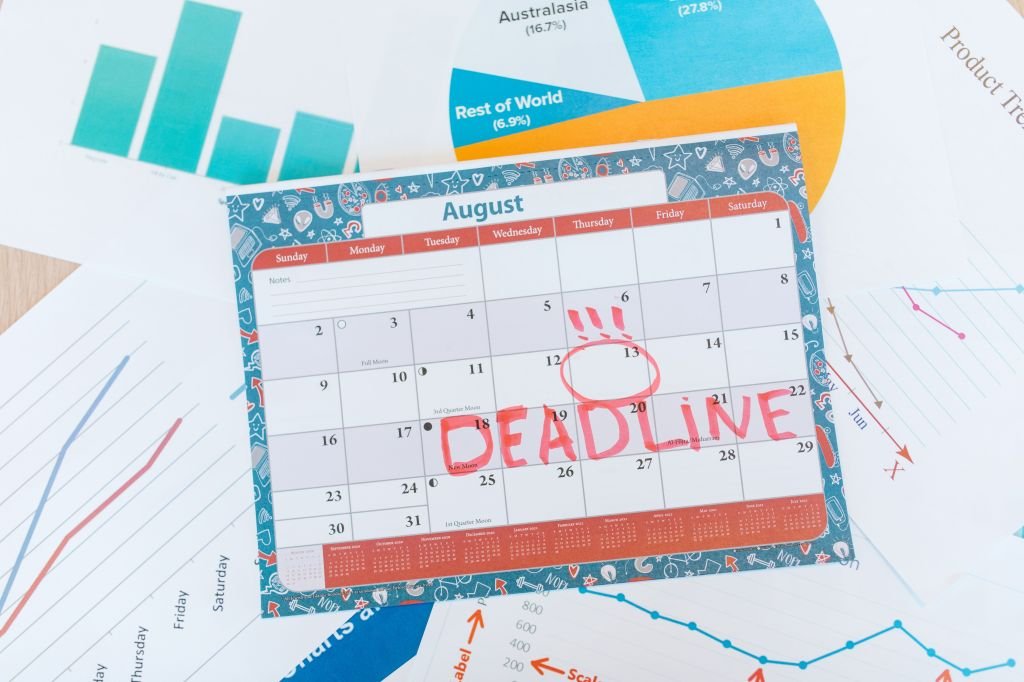
    A calendar representing a fixed weekly routine for checking finances

    I stopped checking right after spending, and started checking before.

    Looking right after you spend money almost always feels bad, you just watched the number drop. Looking before you plan your week gives you the same information without the same emotional gut-punch.

    I write the number down somewhere, even when it’s ugly.

    Not to judge myself. Just so avoiding it stops being an option. Once it’s written down, it’s just a fact, not a fear waiting in an app.

    The same survey found only 17% of people feel completely in control of their financial future. That didn’t surprise me. If almost half of people are avoiding the information itself, how would anyone feel in control?

    Same approach: Your Savings Account Might Be Secretly Costing You Money

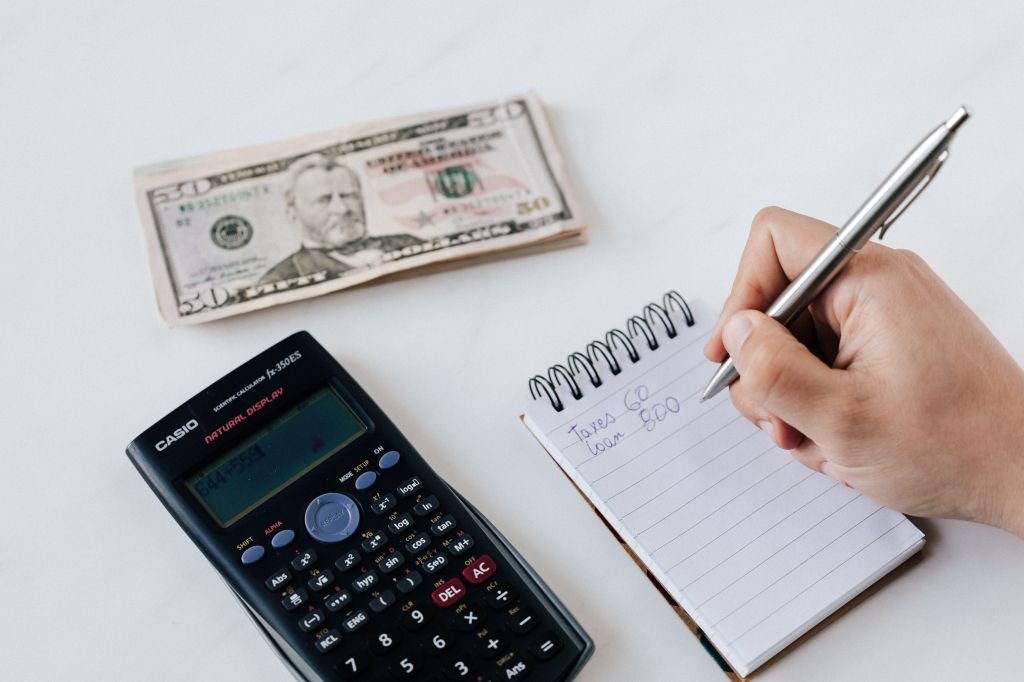
    A person writing down their finances in a notebook to face the numbers honestly

    Do you check your accounts on a schedule, or only when you feel ready to? Be honest with yourself on this one, not with me.

    Avoiding the number never once made the number better. Looking at it, even when it’s hard, is the only thing that’s ever actually helped me plan.

    Foundation for this: 53% of Americans Can’t Cover a $1,000 Emergency

    Disclaimer: This article is for educational purposes only and should not be considered as financial or mental health advice. Financial anxiety and account avoidance behaviors vary by individual. Consult with a qualified financial advisor or mental health professional if financial stress is impacting your wellbeing.

  • The Average American Spends $3,045 a Year on Impulse Buys. I Almost Became One of Them Last Week.

    The Average American Spends $3,045 a Year on Impulse Buys. I Almost Became One of Them Last Week.

    A hand hovering over a smartphone screen about to tap buy now

    It wasn’t even something I needed. I was tired, stressed about money, and scrolling — and for about ten seconds, buying something small felt like it would fix how I felt. It wouldn’t have. I closed the tab instead.

    The terrifying part is that it almost works. For those ten seconds while the confirmation page loads, you actually feel better. It’s not real relief, but it feels real enough to be dangerous.

    Turns out that urge has a name, and real numbers behind it. Capital One Shopping’s research (updated June 2026, based on 2025 data) found the average American spends $254 a month on impulse buys — $3,045 a year. Not one big purchase. Dozens of small ones that add up quietly.

    Have you ever caught yourself about to buy something not because you needed it, but because of how you were feeling in that exact moment?

    This helps: I Cut My Coffee, Dessert, and DoorDash

    It’s more common than you’d think

    92% of Americans have some history of impulse buying, and 54% have made at least one impulse purchase of $100 or more. It’s not a small-money habit — for a lot of people, it’s a real leak in the budget.

    Here’s what surprised me: it’s not younger people leading this. Millennials impulse-buy the most (74%), then Gen X (69%), then Gen Z (63%), with Baby Boomers lowest at 53%. The stereotype about reckless younger spenders doesn’t really hold up in this data.

    A stressed person looking at bills and a laptop at a table
    DemographicImpulse Buy RateRankingSourceData Year
    Millennials74%HighestCapital One Shopping2025
    Gen X69%2ndCapital One Shopping2025
    Gen Z63%3rdCapital One Shopping2025
    Baby Boomers53%LowestCapital One Shopping2025
    All Americans w/ History92%OverallCapital One Shopping2025
    $100+ Impulse Purchase54%Major purchaseCapital One Shopping2025

    The stress connection is real, even if it’s not simple

    A separate Harris Poll survey from April 2025 found 51% of Americans regularly stress about money, and 41% worry they don’t have enough saved for an emergency. That same survey didn’t measure whether stress directly causes impulse buying — I want to be honest about that, the two studies don’t prove one causes the other.

    But a different Harris Poll survey, from December 2024, found 22% of Americans made impulse purchases that significantly hurt their finances in the past year, and 16% said they spend more on impulse buys in a typical month than they put toward retirement. Whatever the exact link, the pattern feels familiar to a lot of people: money stress goes up, and so does the urge to buy something, anything, that feels like relief.

    Does spending ever feel like relief to you, even for a few minutes, even when you know it isn’t really helping?

    Read: 53% of Americans Can’t Cover a $1,000 Emergency

    What I do instead now

    For one week, I wrote down every single time I felt the urge to buy something I hadn’t planned for — not just the ones I acted on, all of them.

    Next to each one, I wrote down what I was actually feeling right before: bored, tired, stressed, or genuinely needing the thing.

    By the end of the week, almost none of them were about the item itself. That was the real, uncomfortable, useful part.

    "A handwritten list in a notebook on a desk

    Once I saw that pattern, I couldn’t unsee it. Every impulse buy was never about needing the thing — it was about needing to feel something different for five minutes. That realization hurt, but it was also the key to stopping.

    Would you actually be willing to write down the feeling behind your next few purchases, even the small ones, before you buy?

    Worth trying: 5 Simple Ways to Save $100 This Month

    Disclaimer: This article is for educational purposes only and should not be considered as financial or mental health advice. Impulse buying behaviors and stress responses vary by individual. Consult with a qualified financial advisor or mental health professional before making major financial or lifestyle decisions.