Tag: credit card fees

  • Don’t Pay That Credit Card Late Fee Yet — Read This 2026 Update First

    Don’t Pay That Credit Card Late Fee Yet — Read This 2026 Update First

    A credit card late fee can hit your account the moment you miss a due date, and in 2026 that fee is probably a lot higher than you think it should be. Back in 2024, the Consumer Financial Protection Bureau announced a new rule capping the typical credit card late fee at just $8, down from $32. A lot of people heard that news once and assumed the cap already applied to them. It doesn’t. If you’ve paid a credit card late fee anytime in the last year, you almost certainly paid the old, higher amount, not $8.

    Here’s what actually happened, because the real story matters more than the headline most people remember. Regulators finalized the $8 cap in March 2024, but banking trade groups sued immediately, and a federal court blocked it before it ever touched a single real cardholder. The fight dragged on for a year, and in April 2025 a federal judge in Texas threw the rule out for good as part of a settlement between the agency and the card industry, which left the older, higher fee framework fully in place, exactly as the official rule page still confirms today. Senate Democrats tried reviving the $8 idea through a new bill in January 2026, and separately, the CFPB signaled in July 2026 that it may attempt new rulemaking again through a different legal path. None of that has changed anything yet. Until one of those efforts actually becomes enforceable law, your statement will keep following the older rules, not the $8 number that made headlines two years ago.

    So what does a credit card late fee actually cost you right now? Based on real 2025-2026 issuer data, the typical first-time credit card late fee sits around $30 to $32, and a repeat late payment within six billing cycles can push that fee up to $41 or $43. Smaller banks, credit unions, and store or subprime cards tend to land at the higher end of that range. The number people remember from the news and the number actually printed on a real statement are two different things in 2026, and that gap is exactly where the confusion lives.
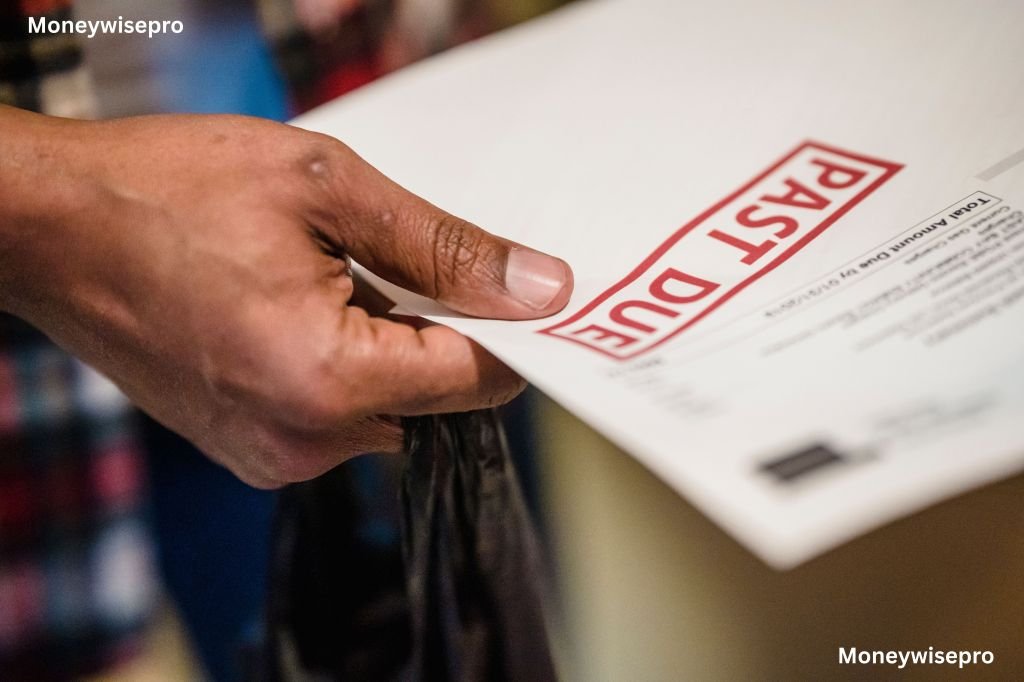
    Close-up of hands holding a credit card billing statement showing a past due balance notice.

    Here’s what actually helps, and it has nothing to do with waiting on Congress. A credit card late fee is one of the more negotiable charges on an account. Most major issuers have a “goodwill” adjustment process, and a first-time late payment on an account with a decent history gets waived more often than people expect, simply because someone called and asked. It costs nothing to try, and it works far more often than the regulatory back-and-forth would suggest.

    The second fix is even simpler: set at least the minimum payment to autopay. That one setting doesn’t cost you any flexibility, since you can still pay more manually whenever you want, but it guarantees a credit card late fee never becomes a possibility in the first place, no matter how busy or forgetful a particular month turns out to be. Most banking apps let you set this up in under two minutes, and it’s one of the few money habits that quietly protects you without ever requiring a second thought once it’s in place.

    Same principle applies to a related credit card myth worth clearing up while we’re on the topic:
    Average American Owes $6,715 in Credit Card Debt. The Fed Just Made That Number More Painful.

    A person at a kitchen table talks on the phone while reviewing a paper bill.

    Here’s a nuance almost nobody explains clearly. A credit card late fee gets charged the moment your payment is late, sometimes just a day past the due date. Your credit score is a different matter entirely. Under federal credit reporting rules, an issuer generally cannot report a late payment to Equifax, Experian, or TransUnion until it’s a full 30 days past due. That means a payment that’s five or ten days late can cost you a real credit card late fee without touching your credit score at all, as long as you catch up before hitting that 30-day mark. The fee and the score damage are two separate clocks, and mixing them up is one of the most common money mistakes people make after a missed due date.

    This helps explain why keeping track of due dates matters more than most people admit:
    Is Your Credit Report Really Free in 2026? Here’s What the New $16 Fee Actually Means

    A wall calendar shows a payment due date circled in red beside a credit card.

    For anyone who wants the short version of how we got here, this is the real timeline behind the headline:

    DateWhat Actually Happened
    March 2024Rule finalized, capping the fee at $8
    May 2024Blocked by a federal court before it ever took effect
    April 2025Vacated by settlement, old fee amounts stay in place
    January 2026Senate Democrats reintroduce a bill to force the $8 cap into law
    July 2026The agency signals it may attempt new rulemaking again

    None of these dates change what’s due on your own account today, which is exactly why a simple reminder system beats relying on memory or old news. a free tracker worth keeping on hand for exactly this kind of situation can catch a payment before it turns into a credit card late fee in the first place.

    Money stories like this one tend to get repeated long after the facts change underneath them, and that gap is where real money gets lost every single day. A five-minute phone call to ask for a fee waiver almost always costs less than staying quiet and assuming nothing can be done.

    Have you ever paid a credit card late fee without asking whether it could be waived first?

    Disclaimer: This article is for general information only and is not financial or legal advice. Fee rules and financial regulations can change, so confirm current terms directly with your card issuer before making a decision.

  • Is a Credit Card Surcharge Legal in Your State in 2026?

    Is a Credit Card Surcharge Legal in Your State in 2026?

    You hand over your credit card at checkout, and the total is suddenly a few dollars higher than the price on the tag. A $50 order turns into $52 before you even sign. That extra line is a credit card surcharge, and in 2026 it is legal in most states, but the actual rule changes completely depending on your zip code. Millions of Americans see this charge every single week and still have no real idea if the business is even allowed to add it. The confusing part is that the honest answer is almost never a simple yes or no.

    Credit card surcharge laws by state are not one uniform rule. They shift block by block depending on where the business sits, which is exactly why the same receipt total can be normal in one state and illegal in the next.

    A person tapping a credit card against a handheld mobile card reader to pay

    A credit card surcharge is different from a convenience fee, even though people use the two words like they mean the same thing. A surcharge is a percentage added only when you pay with a credit card, and it moves up or down with the size of your bill. A convenience fee is usually a flat dollar amount charged for using a payment channel the business considers extra work, like paying a tax bill or a rent bill online instead of by mail. NerdWallet breaks down the legal difference between a surcharge and a convenience fee in plain language, and the short version is that surcharges are allowed almost everywhere now, but only on credit cards, never on debit or prepaid cards.

    The card networks also put their own ceiling on how high a credit card surcharge can climb. Mastercard caps it at 4 percent of the transaction. Visa caps it at 3 percent. A business that goes above either number is breaking its own merchant agreement, even in a state where surcharging is fully legal on paper. That is one reason the fee on your receipt almost always lands somewhere between 2 and 4 percent, rarely higher.

    Here is where it gets messy. A handful of states still ban surcharges outright, full stop, no exceptions. Others allow them only if the store follows strict disclosure rules, and a few cap the amount even tighter than Visa or Mastercard already do. A store in Texas can add a credit card surcharge with almost no restriction. The same exact charge in Connecticut is simply against the law.

    StateSurcharges Allowed?Rule or CapWhat Changed in 2026
    Connecticut, Maine, MassachusettsNoFull ban on credit card surchargesNo major change this year
    CaliforniaYes, with limitsFee must be built into the listed priceEnforced since July 2024
    New YorkYes, with limitsCannot exceed the store’s processing costEnforced since February 2024
    ColoradoYes, with limitsCapped at 2% or the actual processing costActive enforcement through 2026
    LouisianaNo, on debit cardsNew ban on debit card surchargesNew law effective August 1, 2026
    New JerseyUnder reviewFull surcharge ban proposed (AB4807)Bill pending in the 2026 session
    Close-up of a printed receipt showing itemized charges and an extra fee line

    None of this is standing still. Lawmakers in several states are actively rewriting the rules this year. A 2026 legal tracker from the law firm Venable lists new junk fee disclosure bills moving through Illinois, Tennessee, and New York, all aimed at forcing businesses to show the full price before you pay, not after. Louisiana just banned surcharges on debit card payments starting August 1, 2026. New Jersey lawmakers are pushing a full surcharge ban of their own. The direction almost every state is moving this year points the same way, toward more upfront disclosure and less room for a surprise number at the register.

    The federal government treats this as a consumer protection issue too, not just a state one. The Consumer Financial Protection Bureau explains what counts as a convenience fee and when a company is, and is not, allowed to charge you one. The same core idea repeats across almost every source on this topic. A business has to tell you about the extra charge before you pay, not bury it in the receipt afterward.

    Related read: Why Your Hotel’s Resort Fee Might Finally Show Up Before You Book in 2026

    Nobody enjoys watching a number grow after they already decided to buy something. That small jolt at the register sticks with people a lot longer than the actual dollar amount ever does.

    Checking whether a credit card surcharge is legal where you live only takes a minute. Look for a sign near the register or the card reader before you tap or swipe your card. Federal rules that took effect in December 2024 require businesses to disclose fees like this clearly at checkout, not spring them on you at the very last screen. If a store adds a surcharge with no posted notice anywhere, or the fee looks higher than 4 percent, you have grounds to ask for it to be removed on the spot, and in some states, grounds to report the business to your state attorney general’s office.

    You might also want to check: Why Do So Many Stores Charge You to Return Something Now?

    This fits a pattern many Americans have noticed all year, not just at the checkout counter. Prices keep moving in ways that were rare just a few years ago. Some grocery stores now change shelf prices in real time while you are still walking the aisles. Some hotels bury a resort fee until the very final booking screen. A credit card surcharge is just the newest version of the same problem, a price that is not really the price until the last second.

    Here’s a pattern worth noticing: Grocery Store Prices Can Now Change While You’re Still Shopping

    A small business owner standing behind a checkout counter reviewing daily sales

    Small businesses are not always the villain in this story either. Card processing fees eat into thin margins, and a lot of owners see a credit card surcharge as the only way to keep prices level for cash customers. That does not make an undisclosed fee legal, but it does explain why this fight keeps showing up in state legislatures on both sides, business groups pushing to keep surcharging flexible, and consumer groups pushing for stricter upfront disclosure.

    The honest takeaway is that a credit card surcharge is not automatically a scam. In most states, it is a legal charge, capped by the card networks, and required to be disclosed before you pay. What actually changes is the state line you happen to be standing on when you swipe. Knowing your state’s real rule, not just guessing, is the only way to know if that extra charge on your receipt is normal or something worth pushing back on right at the counter.

    So next time your total jumps at checkout, are you actually going to look for that sign before you tap your card?

    Disclaimer: This article is for general information only and is not legal or financial advice. Surcharge laws change often and vary by state, so check your state’s current rule or talk to a licensed professional before making a decision based on this article.