Tag: Buy Now Pay Later

  • Does Splitting Your Rent Payment Into Two Actually Save You Money?

    Does Splitting Your Rent Payment Into Two Actually Save You Money?

    Rent is due on the first of the month. Paychecks do not care what the calendar says. That mismatch is now big business. A wave of new apps in 2026 lets you try splitting your rent payment into two smaller chunks instead of paying it all at once, and millions of renters are already signing up, according to Fortune’s reporting on the trend.

    The pitch sounds simple. Instead of handing over your full rent on day one, an app like Flex breaks it into two payments spread across the month, so your rent lines up closer to when your paycheck actually lands. Public radio’s Marketplace reported that housing costs have gotten so tight for so many households that this kind of flexibility now feels less like a luxury and more like survival.

    Here is the part that gets skipped in most of the coverage: splitting your rent payment is not free. Someone is charging for that flexibility, and the real math on what it costs over a full year is bigger than the small monthly number makes it look.

    Young woman in a gray sweater checking a rent payment app on her phone at a small kitchen table

    Take Flex, one of the biggest names in this space. Its own rent payment page lists a $5.99 monthly membership fee, a 0.5% processing fee on the total rent amount, and a split fee of up to 3% that does not shrink even if you pay everything back early. Paying with a credit card instead of a bank account adds another 2.5% on top. On a $1,800 rent payment, the split fee alone can run close to $54 in a single month, before the membership fee is even added in.

    Do that every month for a year and the fees stop looking small. A renter paying $1,800 a month who uses the full split option every single month could be paying somewhere between $130 and $200 a year just for the option of breaking one payment into two. That is real money that never touches the actual rent, the security deposit, or anything that improves the apartment.

    Rent Payment MethodExtra Monthly CostReports to Credit Bureaus?
    Paying full rent yourself, on time$0Rarely, unless your landlord reports manually
    Landlord agrees to a split due date directly$0 (if they agree)Rarely, unless your landlord reports manually
    Rent-split app, paid from a bank accountRoughly $5.99 + 0.5% + up to 3%Yes, on-time payments only
    Rent-split app, paid with a credit cardSame as above, plus 2.5%Yes, on-time payments only
    Paying 5+ days late, landlord late feeOften 5%-10% of rent, by state and leaseNo

    Check this:
    Security deposit alternatives sound free too, and they are not either

    There is one genuine upside worth being fair about. Flex states it reports on-time payments to all three major credit bureaus, and the company says it will never report anything except an on-time payment. For someone with a thin credit file, or someone rebuilding credit after a rough stretch, turning your biggest monthly bill into a payment history that actually counts toward your score is a real benefit that a landlord accepting a paper check never gives you.

    Man in a blue collared shirt reviewing a rising credit score graph on his laptop at home

    But building credit and covering a shortfall are two different problems, and splitting your rent payment only genuinely helps with the first one. CFPB research on buy now pay later use already flagged the bigger risk here: when people stack several small installment plans across different bills, the payments quietly pile up in the background until one missed paycheck knocks the whole thing over. Rent is usually the single largest bill in a household budget. Turning it into an installment plan on top of a phone bill, a BNPL plan for groceries, or a DoorDash order bought on credit is exactly the kind of stacking that research points to.

    This is why an app like this makes the most sense for a narrow group of people, not everyone. Freelancers and gig workers whose income arrives in lump sums rather than steady biweekly paychecks can genuinely benefit from choosing their own payment dates. Someone whose paycheck lands on the 3rd but whose rent is due on the 1st has a two-day gap that a split payment can bridge without ever missing a due date. For those specific situations, the fee can be a fair price for avoiding a landlord’s own late fee, which frequently runs higher than anything Flex or a similar app charges.

    Couple sitting on a couch comparing a wall calendar against a stack of household bills together

    Nobody signs up for one of these apps because they enjoy paying a fee. They sign up because the due date feels impossible and the fee feels smaller than the alternative in that exact moment.

    For everyone else, the math usually points the other way. If the real reason for wanting to split a rent payment is that the money simply is not there yet, an app fee on top of the rent does not fix that gap, it just moves it two weeks down the calendar while adding a cost to get there. Many renters are safer building even a small buffer, even $50 or $100 sitting untouched, than adding a recurring fee to their biggest bill every single month.

    Learn this:
    BNPL looked smart for a DoorDash order too, until the credit score questions started

    Before signing up for anything, it is worth pricing out splitting your rent payment the same way this article just did: add up the membership fee, the processing fee, and the split fee for a full year, then compare that number to what your own landlord actually charges for a late payment or a payment plan, if they offer one at all. Some landlords will agree to a split payment with zero fee if you simply ask, especially if you have paid on time for a while already.

    If you are already splitting rent alongside a Buy Now Pay Later plan or two, keeping every due date straight gets messy fast. A free BNPL Payment Tracker can help you line them all up before one of them sneaks past you.

    Same principle applies:
    Hidden hotel fees finally have to show up before you book, rent fees do not have that protection yet

    Many renters using these apps right now are reacting to a due date that feels impossible to hit, not doing the yearly math before they sign up. Rent has grown faster than paychecks in most US cities for years now, and any tool that promises breathing room is going to look appealing in the moment, even when the real cost only shows up later.

    So before you split your next rent payment into two, have you actually compared what the app charges against what your landlord would charge, or would even agree to for free?

    Disclaimer: MoneyWisePro is not a financial advisor. This article is for general information only and is not financial advice. Check your own lease terms and talk to your landlord or a licensed financial advisor before signing up for any rent payment app based on this article.

  • How to Track Multiple Buy Now Pay Later Apps Without Losing Track of What You Owe

    How to Track Multiple Buy Now Pay Later Apps Without Losing Track of What You Owe

    Why is tracking Buy Now Pay Later payments so confusing? The answer is simple: each app runs on its own schedule, pulls from the same bank account, and has no idea the others exist.

    Klarna, Afterpay, Affirm, Zip, Sezzle — most BNPL users aren’t using just one. A typical shopper juggling three or four active plans at once has effectively taken on a second, invisible payment calendar that no single app shows them in full.

    Person looking at multiple finance apps on a phone, trying to track separate payments

    Here’s what makes this worse in 2026. According to CNBC Select’s review of the top BNPL providers, FICO started factoring BNPL loans into credit scores in late 2025. That means the payment tracking problem isn’t just about avoiding overdraft fees anymore. Missed or overlapping BNPL payments can now show up on a credit report the same way a missed credit card payment would.

    Most advice on this topic stops at “just be careful.” A guide from EarnIn on managing multiple BNPL plans puts it plainly: keep all active plans visible in one place, and avoid juggling multiple plans at once because overlapping payments can add up fast. That’s the right idea, but it doesn’t say how to actually see them all at once when each app only shows its own schedule.

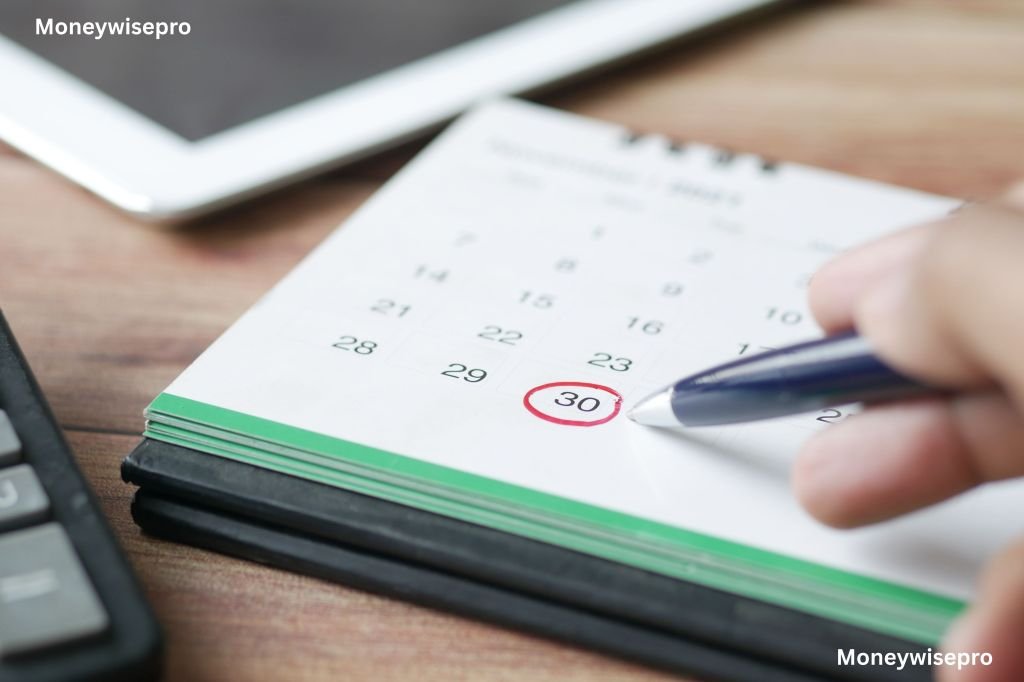
    Calendar with payment due date reminders marked, representing BNPL payment tracking

    Three ways people actually try to solve this:

    1. Checking each app individually. This works until it doesn’t. The moment someone has three or four plans running, checking each app separately before every purchase or bill payment becomes its own task, and it’s the first thing people stop doing once life gets busy.

    2. A spreadsheet. More reliable than memory, but it requires building the structure yourself, remembering to update it after every purchase, and doing the math manually to check for overlapping due dates.

    3. A dedicated one-page tracker. This is the middle ground: less setup than a spreadsheet, more complete than checking apps one by one, and built specifically to catch the problem before it becomes a fee.

    Worth knowing: BNPL debt rarely feels like debt until multiple payments land the same week.
    Buy Now, Pay Later Looked Smart. Here’s Why It’s Becoming a Debt Problem for Millions.

    The core problem isn’t any single app. It’s that none of them talk to each other, and a bank account doesn’t care which app is pulling money on a given day, only that enough is there when it happens.

    Person writing payment details into a planner or tracking sheet by hand

    A simple fix that works regardless of which method someone picks: check every active BNPL plan on the same day each week, write down the app, the amount, and the next due date in one place, and add them up against the next 14 days of expected bank balance. That single number, one number, catches most collision problems before they become a fee.

    This is why a dedicated tracker helps more than a general budgeting app. Most budgeting apps are built to categorize spending after it happens. What actually prevents an overdraft is seeing what’s coming before it hits, specifically the next two weeks, specifically across every BNPL app at once.

    For anyone who wants a version of this already built rather than starting from a blank spreadsheet, the BNPL Stack Tracker is a $9 fillable PDF that does exactly this: one page for every open BNPL account, one page to catch 14-day payment collisions before they trigger a fee, and one page to decide which apps are actually worth keeping.

    MethodSetup TimeCatches Overlapping PaymentsOngoing Effort
    Checking each appNoneNoRepeated, easy to skip
    Spreadsheet20-30 minYes, if built correctlyManual updates each time
    Dedicated tracker5 minYes, built inWeekly check

    “Nobody sets out to lose track of four different payment schedules on purpose. It happens gradually, one convenient checkout button at a time, until the due dates stop lining up with the bank balance. That gap between what people think they owe and what’s actually scheduled to leave their account is where the real damage happens. It’s not a math problem until it suddenly is.

    How many BNPL apps do you currently have open, and could you name all of their next due dates right now without checking your phone?

    Disclaimer: This article is for general informational purposes only and does not constitute financial advice. BNPL terms, fees, and credit reporting practices vary by provider. Consult a licensed financial advisor for guidance specific to your situation.

  • Buy Now, Pay Later Looked Smart. Here’s Why It’s Becoming a Debt Problem for Millions.

    Buy Now, Pay Later Looked Smart. Here’s Why It’s Becoming a Debt Problem for Millions.

    Many Americans discovered something during the pandemic: you could buy things now and split the payment into four interest-free installments. No credit card needed. No interest charges. No fees (in most cases). It felt like a loophole in how money works.

    Today, nearly half of American adults have used Buy Now, Pay Later (BNPL) services like Affirm, Klarna, or Afterpay. And many of them are discovering that the loophole has teeth.

    Person looking anxious while holding phone with payment app

    The numbers tell the story: 47% of Americans have used BNPL at least once. Among those users, 49% have missed at least one payment. Two-thirds of BNPL users are juggling multiple loans at the same time — often five or more open at once — and the payments don’t wait.

    BNPL Usage & Risk MetricPercentage/NumberSourceNote
    Americans Used BNPL47%Survey dataAt least once
    Missed at Least One Payment49%Of BNPL usersAmong users
    Juggling Multiple Loans66% (2/3)Of BNPL usersOften 5+ open
    Average Active Loans4-6SimultaneouslyPer user
    Payment Missed Example3 paymentsExample scenario$2,000 debt

    Here’s the part BNPL marketing doesn’t emphasize: the “interest-free” part is real, but the “free” part ends the moment you miss a due date. Late fees kick in. Your credit score takes a hit. And as of 2025–2026, those missed payments now show up on your credit report — the same place mortgage lenders and employers look.

    Person reviewing financial spreadsheet or payment calendar with concerned expression

    Many Americans started using BNPL for small things — shoes, a coffee maker, a video game. But the ease of splitting any purchase into four payments meant the habit grew. Groceries went on BNPL. Medical bills went on BNPL. The average BNPL user now has four to six active loans running simultaneously, and each one has its own due date.

    When you have four different companies sending you payment reminders every two weeks, it becomes easy to lose track. That’s how you go from “I’ll just split this one purchase” to “I have $2,000 in BNPL debt and missed three payments.”

    Before things get to that point, there’s a free tracker that shows you every BNPL payment across every app on one page. Worth filling out before it gets away from you.

    A Way to Actually See All of It at Once

    That “losing track” problem is exactly what makes BNPL debt sneak up on people. Four to six apps, each with its own due date, none of them talking to each other.

    The BNPL Stack Tracker is a simple fillable PDF built for exactly this. One page lists every loan you have open. Another catches payment collisions before they trigger a fee. Check it out here — $9, instant download

    The real risk isn’t the interest rate — it’s the trap of treating something “interest-free” as something you can afford.

    I watched people use BNPL like they’d found a cheat code in their budget. They hadn’t. They’d just automated their ability to buy things they couldn’t actually pay for, four separate times.

    Many Americans who would never carry a credit card balance got comfortable with BNPL because it felt safer. The marketing says “no interest,” so people assume it’s less risky than a credit card. But the opposite is true. A credit card gives you protections: if you dispute a charge, the card company backs you. If you return an item, the refund goes back to your card. BNPL doesn’t work that way. You approve the payment upfront, split it into four, and return items are your problem to handle.

    And now that BNPL shows up on credit reports, a missed payment doesn’t just cost you a late fee — it can knock points off your credit score for months. For someone saving up for a mortgage or car loan, that can mean paying thousands more in interest on much bigger purchases.

    That’s exactly what the marketing wants you to feel. But loopholes don’t exist in money — they just move the trap somewhere else. With BNPL, the trap moved from interest to missed payments and credit damage.

    This trap: I Almost Fell Into the “Buy Now, Pay Later” Trap

    Person confidently comparing payment options or financial decisions on laptop

    The hard truth: if you can’t afford something without splitting it into four payments, you probably can’t afford it at all. Many Americans discovered this too late, after they already had multiple BNPL loans stacked up.

    The solution is simpler than the problem: treat every BNPL offer the way you’d treat a credit card offer. Would you put this on a credit card and pay interest? If not, don’t put it on BNPL either. The “interest-free” label should be a warning sign, not a green light.

    If you already have multiple BNPL loans open: stop taking on new ones. Pick one and focus on paying it off completely before your next purchase. Your credit score — and your next mortgage application — will thank you.

    Related: Medical Debt Can Still Wreck Your Credit Score

    Disclaimer: This article is for educational purposes only and should not be considered as financial or legal advice. Buy Now, Pay Later agreements and their terms vary by provider and location. Consult with a qualified financial advisor or credit counselor before using BNPL services or if you have existing BNPL debt.